
Are you having fun?
Rox Codes on building an unsexy business
By Aadil Pickle
Oct 2026
PHOTOS BY REET CHOWDHARY
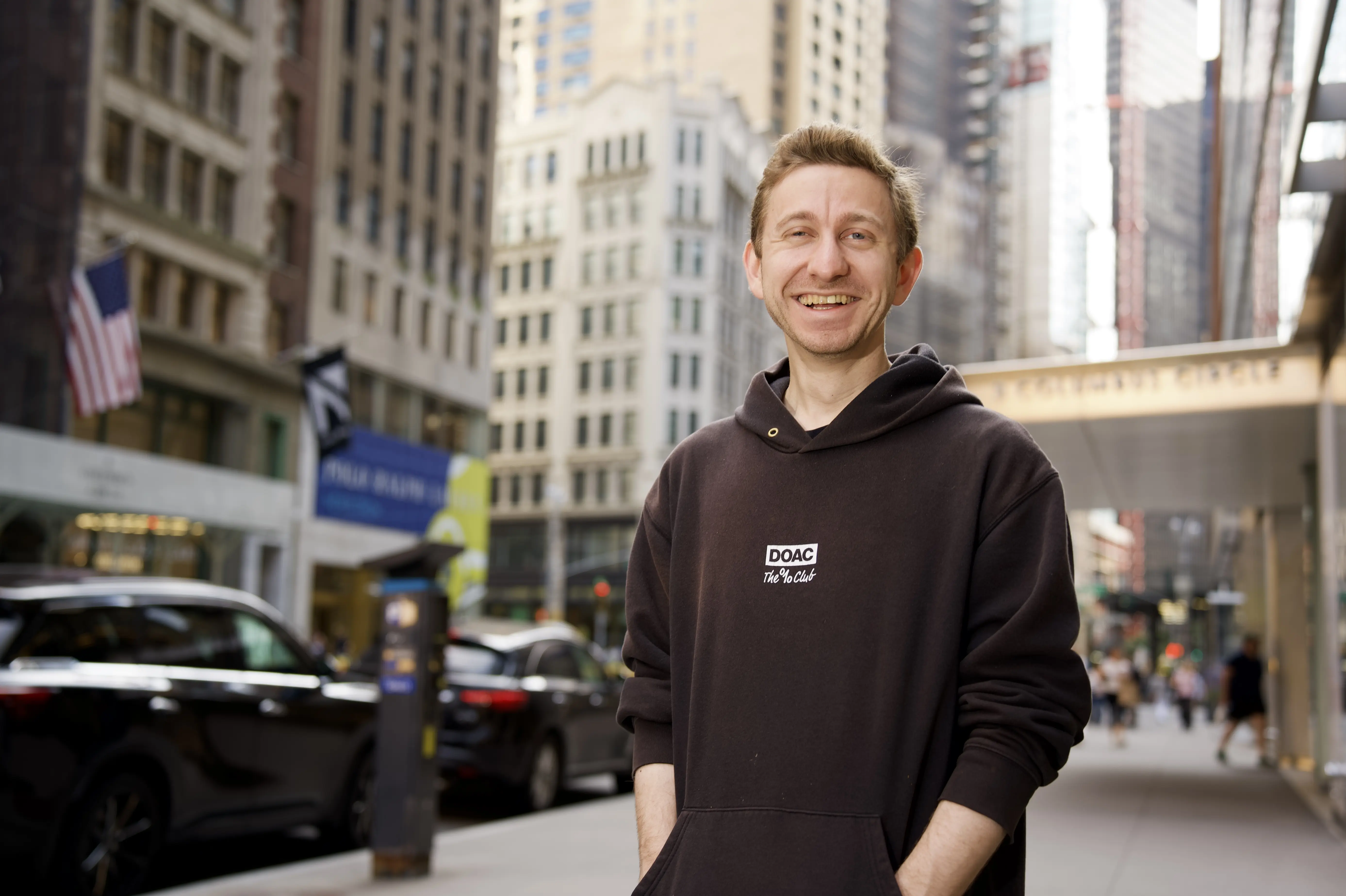
When people first meet “Rox Codes”, they ask, “What’s your real name?” His answer’s always the same:
“Sign an enterprise contract with me and you’ll find out.”
Rox is a smooth-talking Long Islander who has a joke for every situation and a long hug for every friend and stranger he meets. His name comes from his brother’s World of Warcraft handle: ROXKSTAR74. When he started livestreaming himself coding on Twitch, he dropped the “kstar74” and added “Codes”. It’s cleaner that way.
He spent three months at MrBeast making internal tools for video production and analytics. During the entire interview process, no one asked his real name. On his first day, he asked, “Wait, so should I go by Rox or [REDACTED REAL GOVERNMENT NAME]?” His boss, Chucky, responded, “Whatever you want, man. All the guys on the gaming team go by their tags. We have a designer named ‘crispy’ and another guy named ‘web’.” It stuck after that. Now even his girlfriend’s parents call him Rox. I wonder if one day he’ll have kids named Morse and QR.
We met three years ago right after he left MrBeast to go back to making software for YouTubers. “I’ve always kind of wanted to be a YouTuber, but after doing it for a while, I realized I was never about it the way you have to be to be successful. But I still loved hanging out with them, so I thought I’d start making tools for creators.”
His first tool was Clipbot. He made it for himself: he was a streamer at the time and hated editing clips for TikTok, but knew it was important for growth. “Clipping” is now a multibillion-dollar industry; clips of the biggest streamers get a hundred times more views than the streams themselves, and he was the first to automate it. He ended up “selling it for parts”. His first big win was ThumbnailTest, an app that A/B tests YouTube thumbnails to see which one gets more clicks. Rox sold it for six figures a few months before YouTube launched the same exact thing.
Now he’s the CEO of Flightcast, a podcast hosting software company. I couldn’t think of a more boring thing to work on. But Rox? “Bro. Podcasting is lit.”
He’s normally in LA to be close to the entertainment industry, but I met up with him for a week in New York to attend what felt like the “Super Bowl of podcasting conferences.”
I assumed everyone he’d meet would be a stuffy, middle-aged, faceless suit, but I never felt that way once. Because Rox made everyone look like the most interesting person he’d ever met. I’m reminded of the quote: “When I left the dining room after sitting next to Gladstone, I thought he was the cleverest man in England. But after sitting next to Disraeli, I thought I was the cleverest woman in England.”
What I love about Rox is that he’s always trying so hard. When he was on the dating apps, his profile had little notes and doodles in all the pictures to weave together a story about himself. For his girlfriend’s birthday, he read her favorite book and highlighted a word on each page that described her.[1] Throughout the entire conference, he never stopped moving. Just one meeting after another, sipping three Red Bulls throughout the day to get through ten hours of meetings on four hours of sleep. How you do anything is how you do everything, and his passion for everything else in life also translates to his work.
“I know it sounds cringe, but if I execute on what I’m trying to do here, no one can touch me.”
Subscribe to Alexandria
Get new posts delivered to your inbox.
Just keep moving

Rox is a chaotic, energetic and probably ADHD-having man who’s always been able to hack himself into making lots of progress. When we worked out of the same office, he’d have a note above his desk that read, “Do not talk to me. I have work to do and get distracted easily.” He doesn’t really listen to music. He just repeats one song the whole day until it becomes background noise to block everything else out.
“I started streaming myself working because, y’know, can’t procrastinate if people are watching.” On his third day of streaming, a more popular coding livestreamer, ThePrimeagen, sent 100 viewers to his stream, then 150 the next day. Rox started crying on stream. On his blog he wrote, “Within just a few days of all the raids, I [became] a Twitch affiliate. I wasn’t ever planning on becoming a streamer, but now I guess I have to :D”
His version of discipline is creating a system where he can’t fail. He has an addiction tracker on his phone that reads “990 days”, which is how long it’s been since he last drank soda. He refuses to drink anything other than water, coffee and sometimes an emergency Red Bull. “Rules only work if you add three words to the start: no matter what. No matter what, I must not have soda. It actually takes a lot of the pressure off because you don’t have to think about it anymore.”
No matter how much he accomplishes, Rox always feels like he isn’t doing enough. It’s a little painful to watch, but never being satisfied is probably what keeps him pushing. I can see why he wants to work so hard; everything good in his life has come from work.
He started talking to his girlfriend after a mutual friend introduced them to help her get sponsors for her YouTube channel. He became friends with Pieter Levels, the hacker who inspired him to start making projects in the first place, after Pieter found his live-coding stream. Later, Pieter invited him to Thailand, where he met all his other indie hacker[2] friends. His cofounder Steven Bartlett and MrBeast both found him while he was working on ThumbnailTest.
“Do you know A Smart Bear? I read this thing he wrote talking about how your actual pace is your average pace. Like, you may think you need to move five times faster, so you work five times harder. But you can’t keep that up forever, and eventually start working half as hard to compensate, and then you can never catch up. His point is you don’t need to make radical changes and get 1% better every day like people usually say. Just don’t slow down.”
This is what Rox’s calendar looked like during the conference:
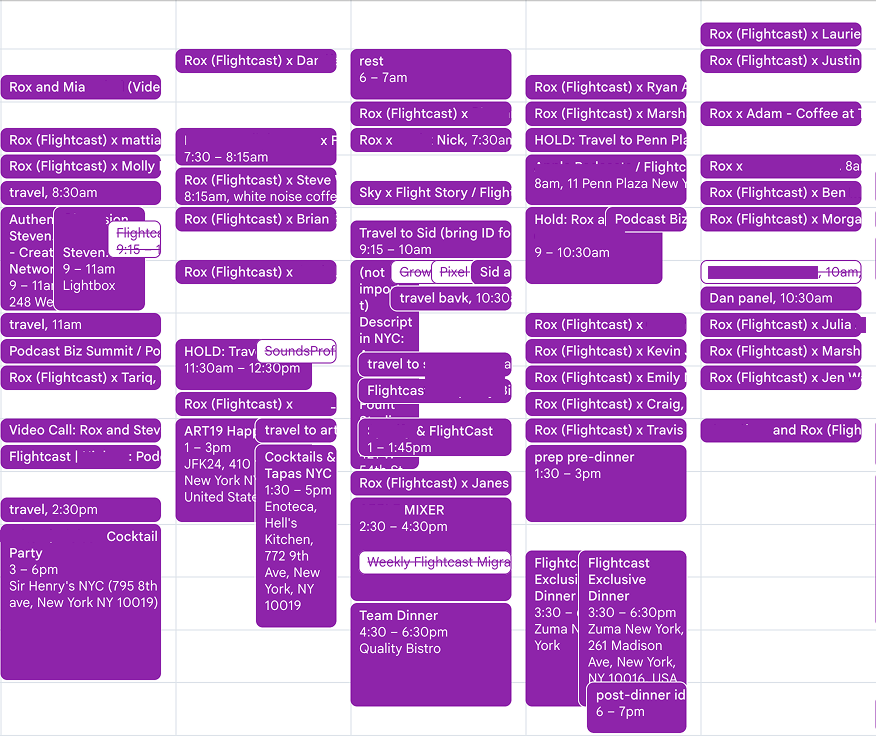
I thought we’d get to relax during the blank slots. But any time he didn’t have anything scheduled, we’d stand at the venue’s entrance and, within 45 seconds (I counted), someone would come up to him. Then, while he was talking to that one person, three other people would say hi, and we’d be running to catch his next meeting. “The whole point is to maximize entropy. The ticket for this conference was $2,000, and every minute I spend here is 10 times more valuable than back home. But that’s only if I’m talking to someone.”
After gulping down some Chinese throat-soothing medicine, he ended with, “I just can’t stop moving.”
Make what only you can
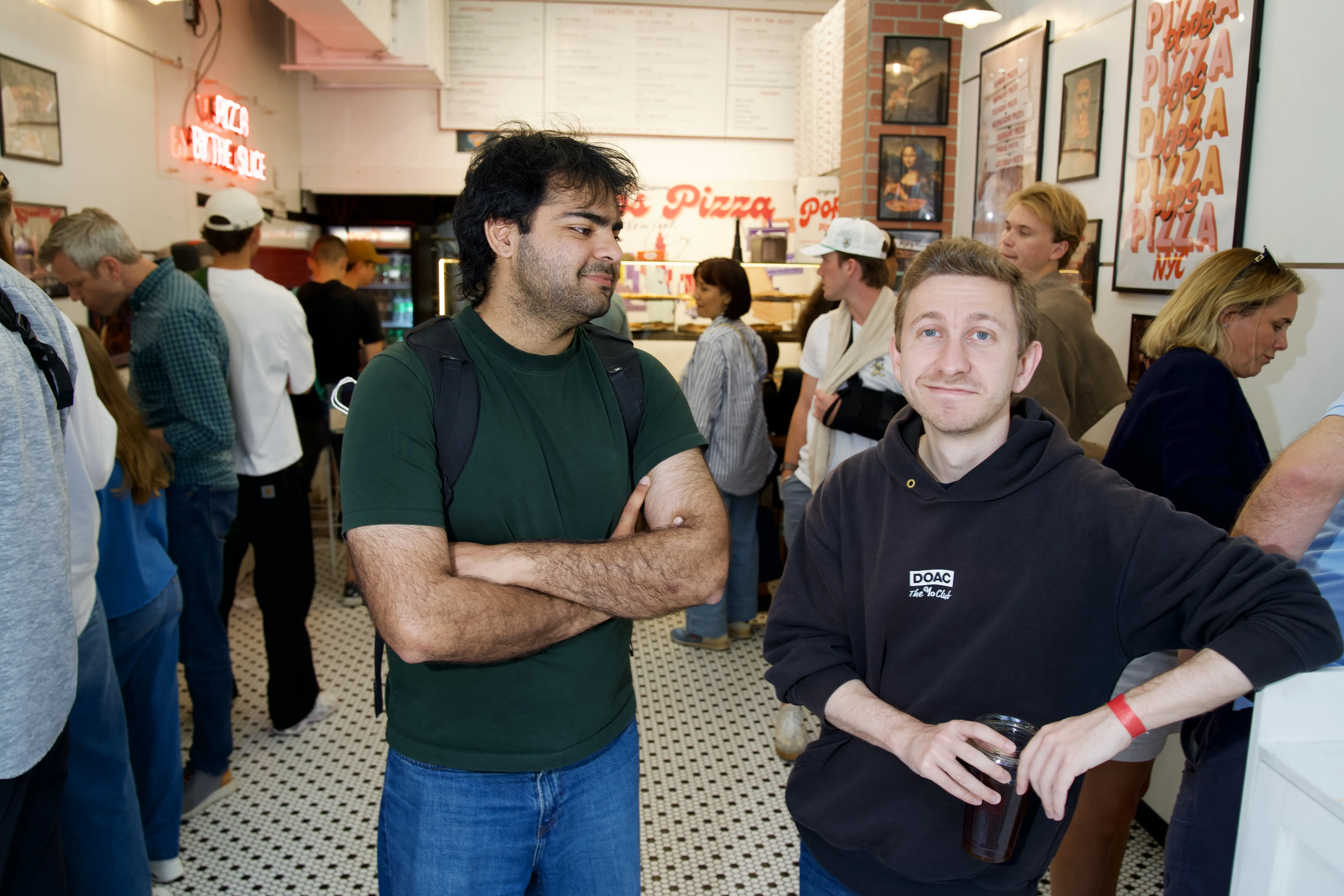
One of Rox’s early ThumbnailTest users was Steven Bartlett, who, according to my British friend, is “like the Gary Vee of England”. He’s best known for hosting The Diary of a CEO, a popular entrepreneurship podcast.
“Every few months, he’d hit me up like, *Rox switches to a British accent* ‘Rox. I have a brilliant business idea.’ Eventually, I’m in between things after selling ThumbnailTest, and he texts me the same thing, ‘Rox, what if we made a simple YouTube video, showed it to a hundred people, looked at where they paid attention, then re-edited it over and over until it was good?’ and I was like, ‘Cool idea. Let’s work on it.’”
“And so he flies me out to London, we build this thing for a month, and then one day I go to Steve and tell him, ‘I have bad news. This is actually not a great idea. But I really liked working with you, we should make more stuff.’ So I’m in London, working on ideas for 4-5 months until he says, ‘Alright, Rox. Just tell me…what’s the absolute best thing we could work on? Like both of us, together, with your skills and my skills.’ And I tell him, ‘Well, it’s probably podcasting software.’ He’s confused at first, but I explain it for a minute and he’s like, ‘You’re right, I’m in.’ Then we hired 3 engineers who helped me build the first version of Flightcast.”
The point was, even if it’s boring, they should make something that takes advantage of their unique experiences. Steven’s podcast would be a customer from day one, and if they made something he and his team loved, every other podcaster would too. Rox had spent years making tools for creators, was a huge data nerd already, and knew how to sell to YouTubers, who are quickly becoming the most popular “podcasters”. One of Rox’s friends works for Nick DiGiovanni, a YouTube chef with more subscribers than Gordon Ramsay, and they’re one of Spotify’s Top 10 “Arts” podcasts. Except Nick doesn’t have a podcast. They just publish their YouTube videos as video podcasts on Spotify and print views.
Rox always brought up this story about how he started making software for creators. “I read Pieter Levels’ book on indie hacking, MAKE, where he says, ‘To make an interesting startup, you have to live an interesting life. Then make for yourself.’ At the time, I didn’t really have anything going on other than Twitch streaming. I was an empty vessel, my only purpose was to stream, and so I started making tools for Twitch streamers.”
But he’s not a podcaster, so I asked him why he does what he does now:
“Money. One hundred percent.”
Rox sees podcasting going the way of YouTube. The best YouTubers already track data to make sure people watch their video all the way through, which is the primary metric the algorithm uses to decide which videos it should show people. “There’s no YouTube Studio for podcasting. All the platforms just sell ads and take a percentage, but we charge a subscription fee because we grow their viewership. Podcasting ads have a TAM[3] of $3-4 billion and I genuinely feel like I can take a big chunk of it.”
Over the week, I saw him melt whenever a customer started raving about his software. Or when, after meeting with an agency, one of their employees pulled him aside and told him, “You’re the smartest guy I’ve met in a long time.”
If it was truly just about money, he would’ve given up a long time ago to make a TikTok-style sports betting app, but there’s something addicting about people loving your work and getting to be the best at it.
Only the wounded physician heals
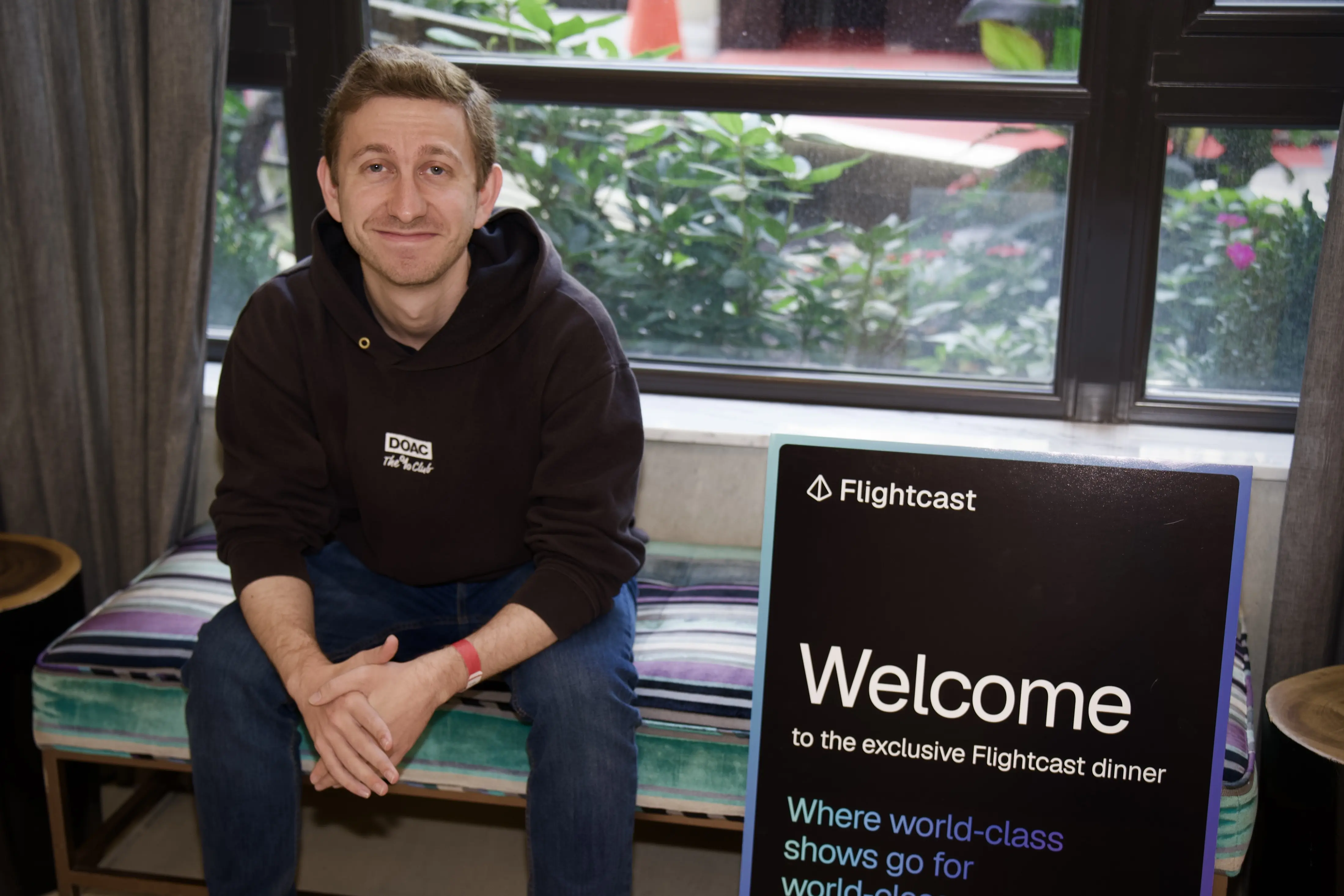
Years ago, when I first met Rox, he told me, “People who think are sad.”
When I reminded him of that quote, he laughed, then added, “I sometimes joke that, y’know how some people have resting bitch face?”
“I have resting sad heart.”
Rox naturally sets high standards for himself. We met at Buildspace, an alternative school for working on your own projects. Every week, we had to present an update about our progress. And every week, Rox would quickly skim over what went well and spend most of the time talking about everything he didn’t do and everything he could do better. But if anyone else tried talking down on themselves, he’d pick them up and talk them through their problems.
Above all, Rox values being kind. He cares way more about the people around him than money or social status. After seeing how dedicated he is to his business, I asked him about his girlfriend. “I’d give it all up for her in a heartbeat,” he told me after yapping about her for an hour. He admires our friend Subby more than any celebrity entrepreneur, saying, “No matter how hard I try, I can never be as kind as him. He’s the best of us.”
His lowest moment all week was when his VP of Growth was in London trying to close a deal, and his miscommunication led to her staying up until 2 a.m. waiting for him to clarify. “More than anything, I hate being the reason someone else’s life gets harder.” He pulled an all-nighter to make sure she had everything she needed for the proposal, and still gave his full attention to everyone he met with the day after.
Here was a guy who told me this was the most important week in his company’s history, yet the entire time he kept asking me, “Are you having fun?”
Each time, I’d reply, “Yeah, of course!”
“What I meant by that was, ‘Is this good content or a waste of time? Did I make you fly out here for nothing?’”
He’s obviously so loved by his friends, girlfriend, family and colleagues, which is likely how he can withstand the high level of pressure he puts on himself. That pressure is what drove him through two and a half years of running an unprofitable, unsexy business before only now reaping the rewards of a high-LTV[4] customer base, but it’s also clearly eating away at him. “I used to go to bed sad most nights, but I’m working on it now. I can see a path out, and it will genuinely take a hundred 16-hour days from me and my team, but I can see us 10x-ing revenue by the end of the year.”
For the sake of my friend, I hope the startup proverb “revenue solves all known problems” is true. And if not, I hope at least you’re having fun.

You can find Rox here. DM him and tell him I sent you.
Notes
- [1]
His girlfriend, Aprilynne, is similarly awesome. They’ll do scavenger hunts for each other’s birthdays, and one year she got me and all of his other friends to surprise him and film ourselves doing silly challenges all around the pier, with a custom Discord bot keeping track of points. Afterwards we had pizza and cake and played Smash Bros. #justdudesbeingguys
- [2]
Indie hackers are startup founders that make software alone or with a small team, without raising money from venture capitalists and usually own the entire company. They’re like cockroaches that figure out how to survive by any means necessary and maximize profits rather than growth rate.
- [3]
TAM stands for Total Addressable Market, i.e., the sum of all money paid by all people for a good or service.
- [4]
LTV is LifeTime Value. It’s how much money a customer is worth to the business the entire time they’re a customer. Fun fact: The average LTV of a credit card holder is $2,000 to $4,500, which is why companies offer such aggressive sign-up bonuses. High LTV usually means the customer stays for longer, or spends a lot before canceling, or both.
Subscribe to Alexandria
Get new posts delivered to your inbox.