
It's okay to be 'chalant
Subhash Ramesh on loving the work as an early stage tech founder
By Aadil Pickle
Aug 2026
PHOTOS BY JAMES LIN
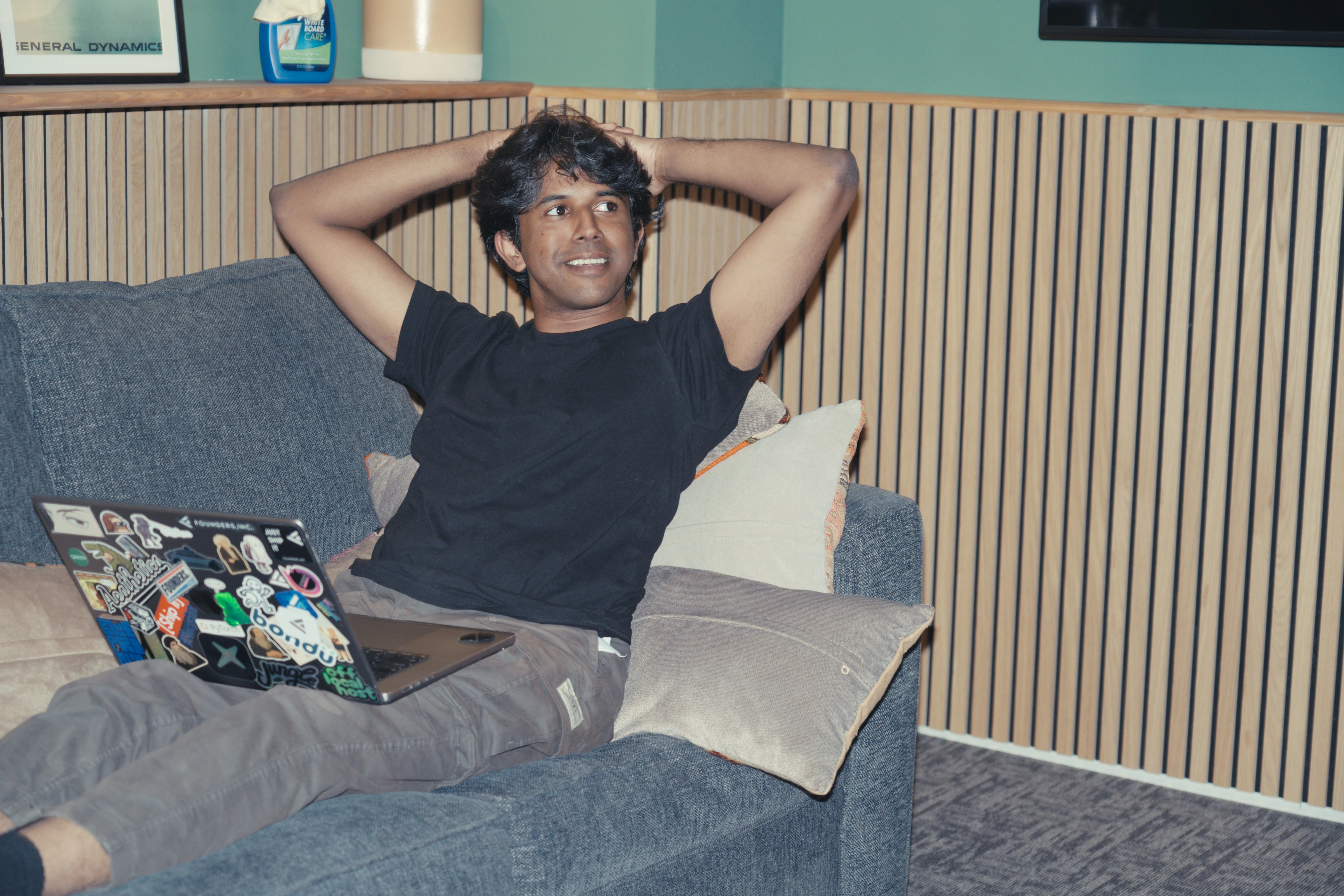
I first visited San Francisco in 2022. Back then, I never thought I could move here because of how evil everyone felt. I met people at house parties who talked about getting rich by launching memecoins, without thinking about the working-class people losing money on the other side. Maybe some of them would be millionaires, but I didn’t think many of them would be my friends.
I’ve lived here for three years now. The biggest reason I moved was because I met Subhash (a.k.a. Subby[1]).
Subby and I were both part of Buildspace, an alternative school for people to work on what they’re passionate about. That summer, he made an AI livestream of me that people could control by sending donations, eventually getting a million views on TikTok before getting banned.
Then he turned that into a website where you could make an AI celebrity say anything you wanted, like getting Lebron James to give a post-game interview about diarrhea. I thought it was funny but probably wouldn’t go anywhere. Two weeks later, he showed me an analytics page with 10,000 users and $1,000 in monthly subscription revenue.
Subby has a habit of making something incredibly technically difficult that barely anyone else can do, and jamming it into a silly product that pays his rent. He paid for college by making an AI music tagger and licensed it to a record company for $15k a month. He called it Galiboo, because it’s “something a kid would laugh at”, and casually made a full time software engineer’s annual salary as a side project.
Using the data from Galiboo, he made Maroofy: a music search and recommendation engine. Before he shut it down, it had over a million searches and won him a $25,000 grant from Buildspace. He still gets emails from users two years later asking why he took it down, and emails from AI researchers asking for his dataset.
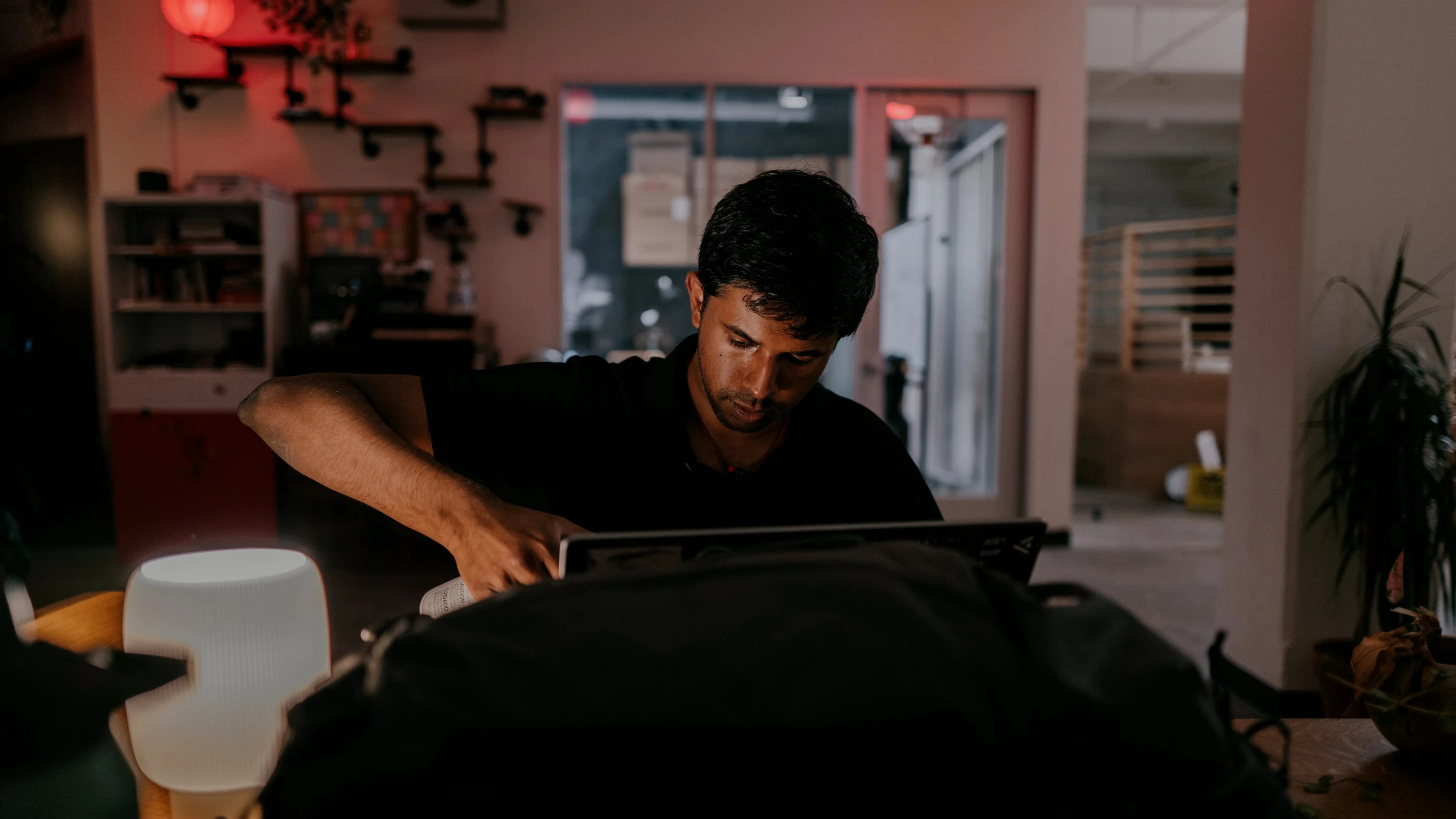
After Buildspace, he made a site called Comfy Workflows to share interesting ways to use Comfy UI; a niche AI image generation software. In two months, he and his cofounder Dylan had 10,000 passionate users in a Discord server paying $1,000/month for their site and $75,000 in investment. Again, for something I couldn’t understand why people would use let alone pay for.[2]
He took two jobs over the past two years, but at his core, Subby wants to be the man in the marina arena. So a few months after getting his green card, he quit to start his own company. Subby’s favourite movie is Iron Man, so just like how Tony Stark made J.A.R.V.I.S, Subby Tech made Figment. Right now it’s an AI personal assistant that sets reminders, fills out forms, and watches the TikToks you send it, but Subby thinks it could be his life’s work.
“I could only ever see myself working on helpful AI or something in medicine, like biotech. But biotech would take too long to ramp up, and right now the models are already good enough to help you without even asking.”
The way I see it, executive assistants used to be for the richest people in the world. Then startups let slightly less wealthy (but still rich!) people hire talent from developing countries to do the job almost as well for $2,000 a month instead of $10,000. Just like how people who never took taxis take Ubers now, I can see a world where millions of regular people would want a personal assistant if it costs only $20/month.

Subscribe to Alexandria
Get new posts delivered to your inbox.
Love your problems
It sounds so simple when I replay his story, but I’ve seen the insane amount of effort he puts into his work. We’ve been roommates for two years and often work out of the same office together, so I know 90% of his days involve the same three things: spending 12 hours in front of his laptop, playing Super Smash Bros and playing basketball. If I ever see him break that routine, I know something’s wrong and I’m on the hunt for whoever hurt him.
I’ve never heard him say “996” even though he’s been doing it for at least the past three years. I’m actually jealous watching him work so much because he seems so satisfied by it. There’s no bragging or complaining. He’ll often forget to eat because he’s so obsessed with whatever he’s working on that he can’t think about anything else[3].
He reminds me of what Justin Kan said about Kyle Vogt at Twitch, “He’d just, like, lock himself in a room for three days and code away and then emerge with something that worked.”[4] When Subby’s working on a problem, I won’t see him for a while because he’ll be home after I'm asleep and will wake up after I’ve left. Even if I do see him physically, his eyes are glazed over because mentally, he’s inside his computer.
He’s always been like this, even before we met. He grew up in Fremont but his family went back to India when he was in high school because of immigration issues. In India, the schools wanted to pull him back two years to catch up because America is too soft, so he went to California online high school instead. “My schedule was: wake up at 2 pm, work on my projects from 4 pm to 11 pm, then I’d sometimes attend classes online from midnight onwards,” he told me.
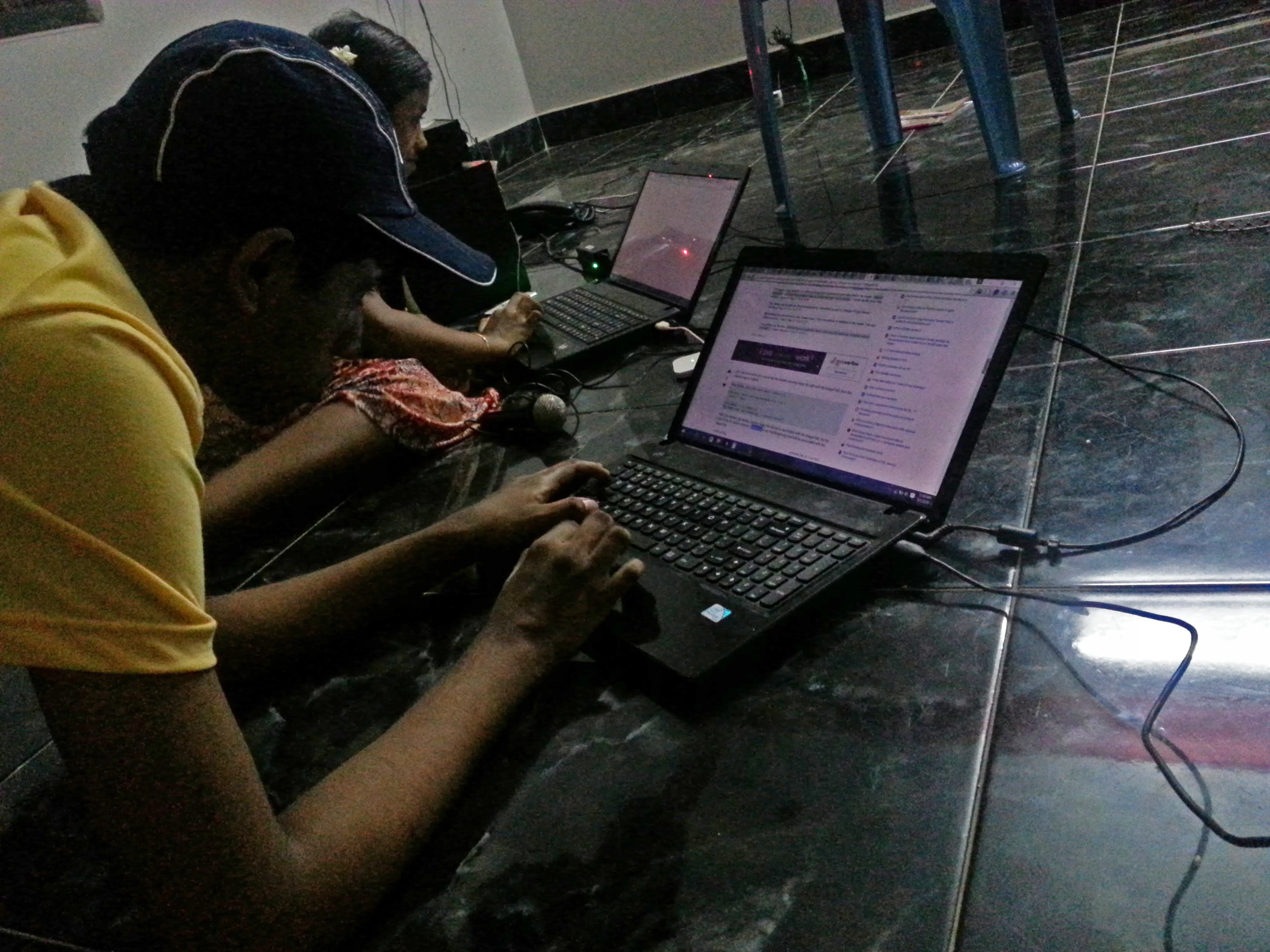
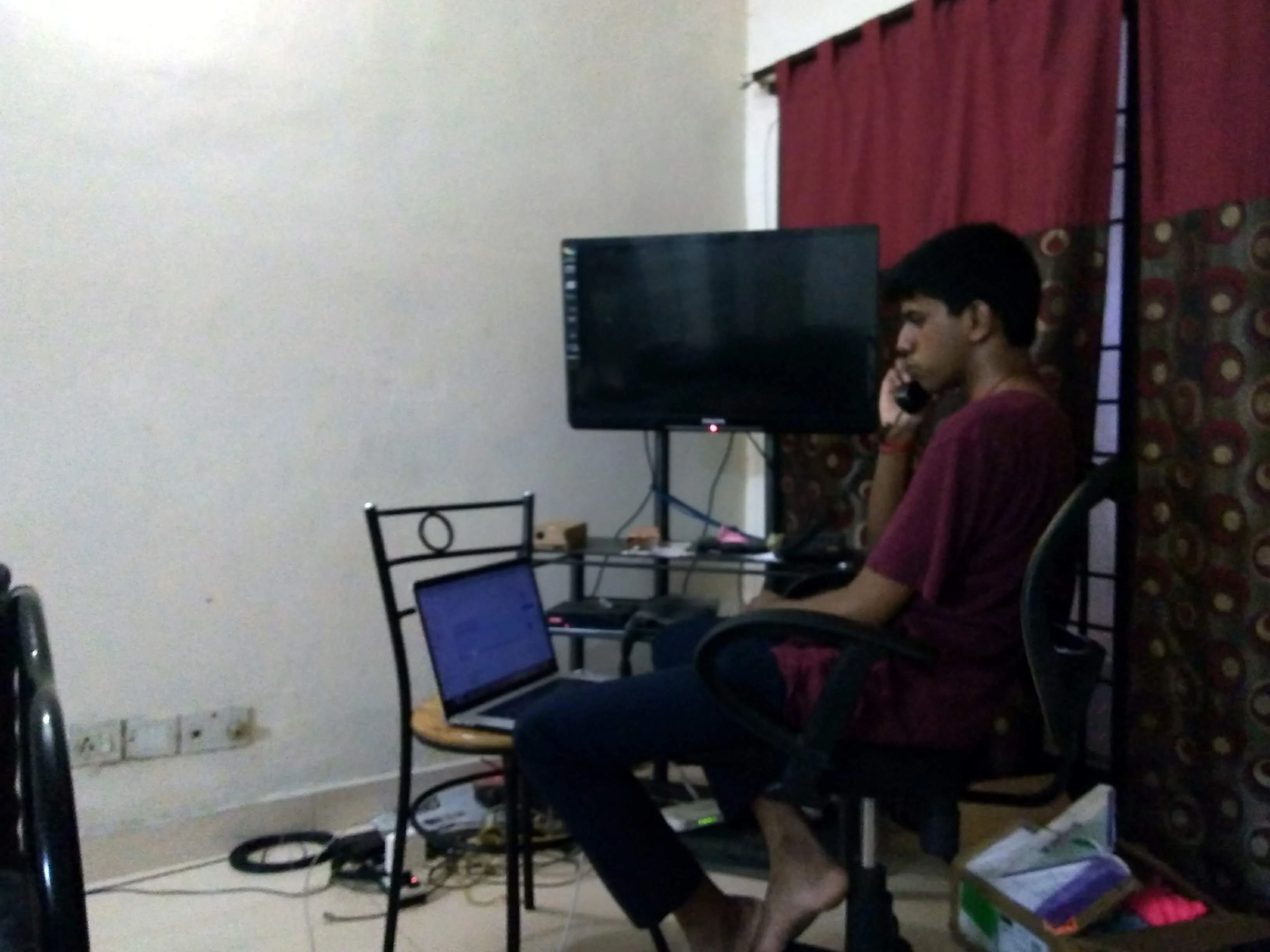



By doing the same thing each day, Subby’s great at everything he’s good at.
“I learned to code just by trying to make something then Googling my errors. I couldn’t sit through any coding tutorials. I opened an HTML book once when I was 13, then was like ‘nope’ after the first page.”
“You never got tired or annoyed coding every day for so long? Or lonely?” I asked him.
“No man! I love problems. Not like that, but you know. Debugging is fun. It’s like solving puzzles, or mysteries. Like maybe it’s hard in the moment, but the dopamine rush from solving some hard problems just always kept me going.”
The things most people would overthink and worry about don’t bother Subby at all. When he got into an American college, the tuition was $60,000 per year. His family had just enough money to pay for his first year.
“Why did you go to UCSD knowing you couldn’t pay for it?” I asked.
He quickly responded, “I don’t know actually, come to think of it. I knew I had to get back into America somehow because of our house and I had to bring my family over. I just thought I’d figure it out, y’know?”
A few seconds later, he added, “Yeah… why did I do that actually…”
By trying to make J.A.R.V.I.S in high school, he realized he was interested in this thing called AI. In college, he kept a very similar schedule of going to classes during the day and spending his nights and weekends working on AI projects.
“Somehow I got into AI music analysis. Just thought it was cool. And there was this guy who wrote a paper, implying he had the MillionSongs Dataset with the original audio, which later got removed because music companies are really protective of their tracks being on the internet. And so I emailed him, and this guy spent half a day helping me debug simple errors, then transferred me this dataset on Google Cloud. I still have it.”
“Eventually I posted my project on Hacker News, but it didn’t get much love. Then this moderator named ‘dang’ emails me like, “yo, sometimes we repost content on the front page that’s really high quality, we’re going to do that for your post tomorrow sometime in the next 24-48 hours.” After that, I got a lot of messages from music companies. One company paid $5k for this music tagging thing I made that could classify instruments and genres, but never ended up renewing. Then this other company asked if I could train my model on their data, and then they paid me 15k per month for a license.”[5]
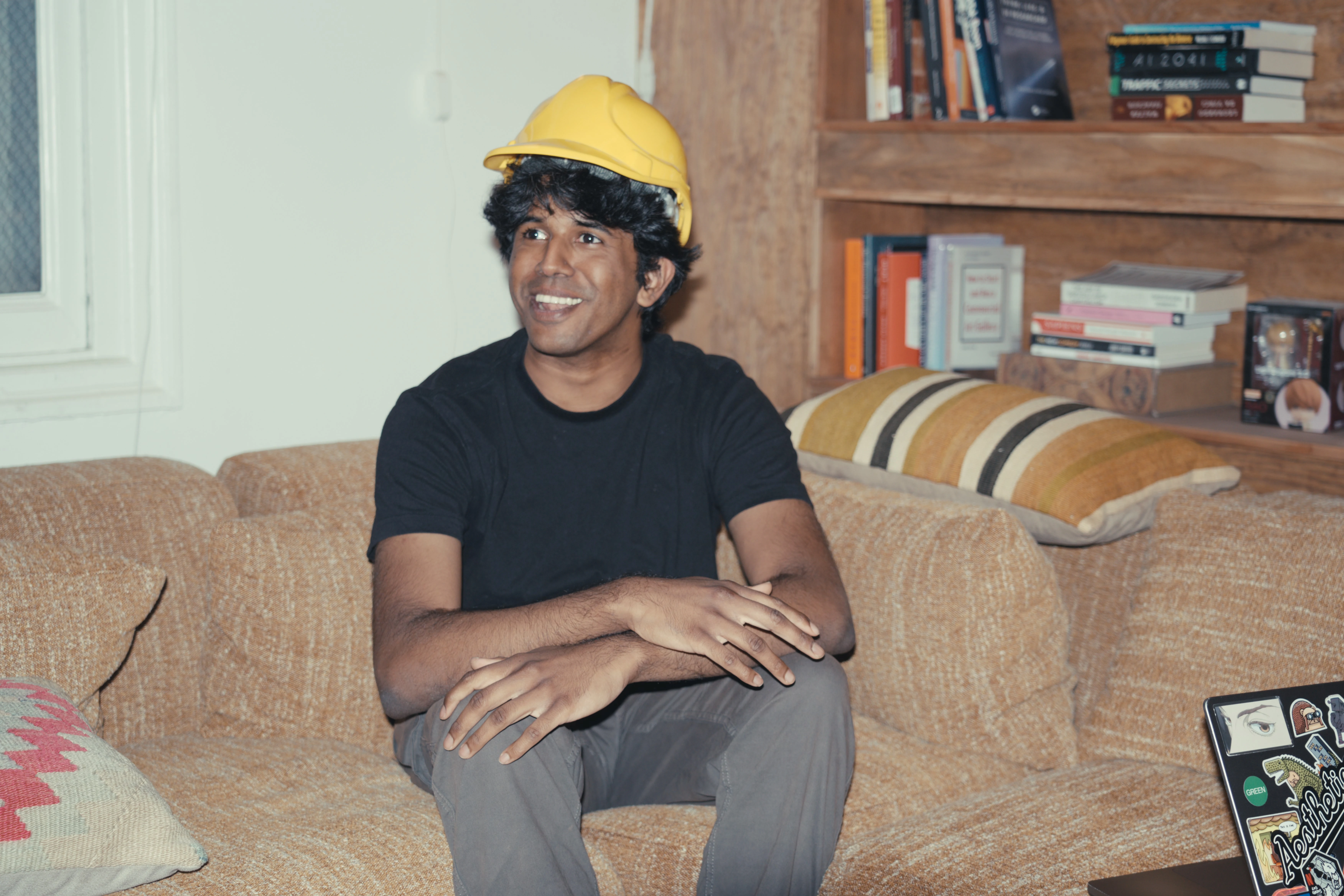
It may sound like Subby’s just a tech guy, only focused on living in an engineer’s paradise. But he just has an incredibly high learning rate, and mostly chooses to apply it to tech. When he needs to, he’ll constantly update his weights and biases to focus on the most important thing.
"I used to get all my dopamine from debugging, but a switch flipped after my first project in college started making money. Now it’s more like ‘debugging people’ if that makes sense. Like looking at a product and figuring out, 'why aren’t people paying for this and what can we change to fix that?'"
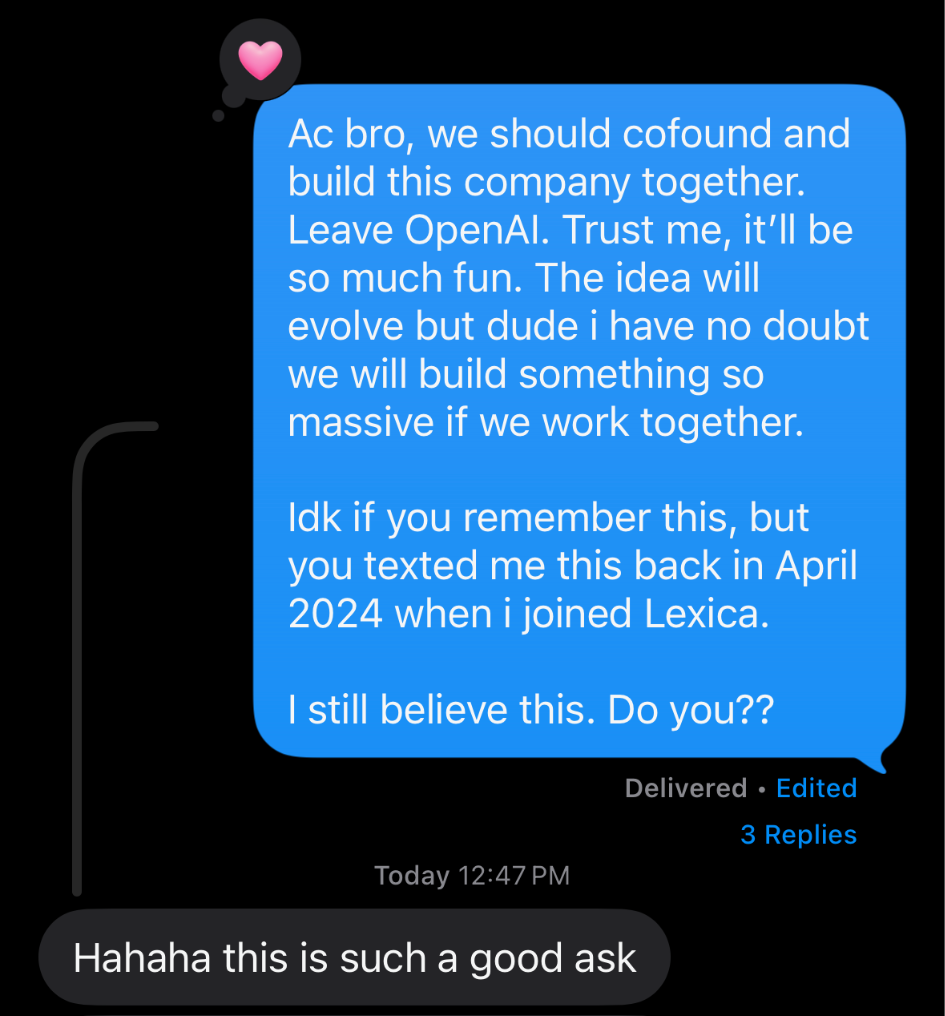
When he decided he wanted to bring his family over to the US, he got a job at UCSD’s supercomputing lab partially because academic institutions are cap exempt for skilled worker visas. He knows more about the US immigration system than some lawyers I’ve spoken to. If he’s building a product and no one’s using it, he’ll focus on making TikTok carousels if he thinks that’ll move the needle. He’ll ask his former boss to be his cofounder with no shame if he thinks that’s how he can make the best company possible[6].
He quit his job with only three months of rent in the bank because he wanted to go back to working on his own thing. He pays for an apartment in San Diego for his mom and sister while living in San Francisco because he knows this is where he has the best chance of making a huge consumer AI company. Just like when he moved from India, somehow he’s never worried about the money. He just knows the only way is through, so why worry?
Never switch up on your mom day ones
There’s just something different about religious engineers. Every morning, Subby kneels and bows in front of a Ganesh statue in our living room. He’s the most humble and low ego person I know, even after three years in a city driven by chips on shoulders.
He doesn’t kill bugs[7], eat beef, or do drugs. He doesn’t even drink coffee or soda. His body is a machine that ingests rice and outputs beautiful software.

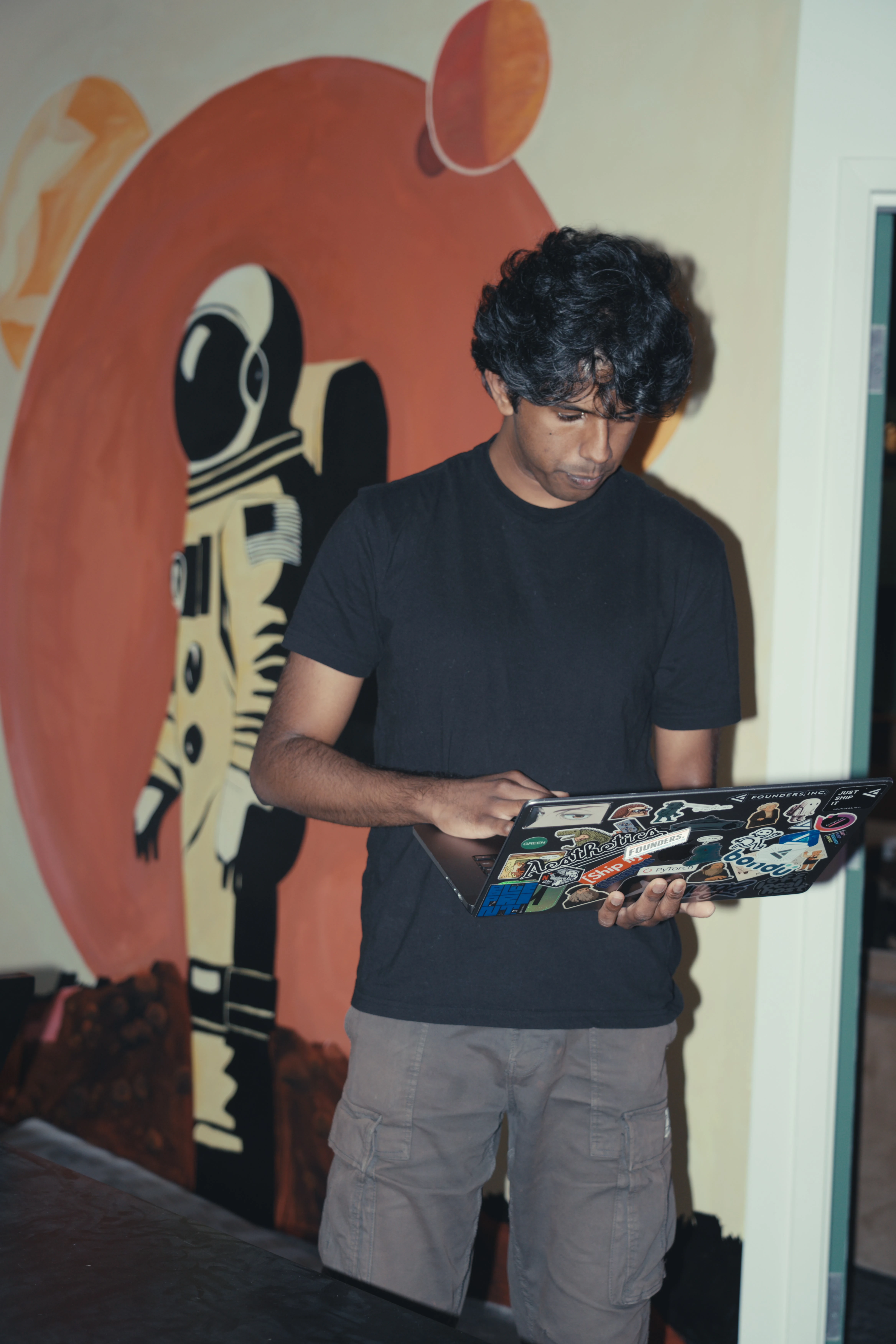
Subby’s also very close with his family, especially his mom. Two years ago, I asked him why he calls her every day.
He flipped the question on me. “When was the last time you saw your mom?”
“I visited Toronto maybe three months ago,” I replied.
“I haven’t seen my mom in seven years. You never know how badly you can miss your family until you can’t see them, even if you wanted.”
Ever since that conversation, I call my mom every day. I’ve seen a hundred young people in Silicon Valley give up everything to come here and chase their dreams. I’m one of them. My plan was to work hard in my 20s, “make it”, then help all the people that helped me. Except I’d never hang out with my friends or call my mom because I was “too busy”. I didn’t realize my mom didn’t care if I got rich in 10 years and bought her a car. She just wanted to spend time with me.
Subby took me off a path where I’d be lonely at the top even if I did make it, and talking to my mom every day reminds me who I am and what’s important. It brings me comfort knowing people like him exist in the world, working hard while staying grounded through his family and faith. I never have to worry about him having a hidden agenda because I can’t imagine not trusting someone who talks to their mom and gods so much.
I ask him why he does all this, why he cares about coding and startups, and why he’s been doing it all for 14 years.
“Well one was to make enough money to bring my family over of course. But when I realized that was going to happen, it was more so that I could have enough money to invest in stuff to help the world. Like charity but you know, private.”
“I think you and I both agree that innovation is the way to solve the world’s problems, and innovation is best done by the private sector, hence investment is better than charity to create change, right?” Subby nodded, “Yeah exactly.”
Everyone’s always trying to help Subby. In the three years he’s been in San Francisco, Subby’s never had to pay for office space. He always has two or three friends that want him to come to theirs just to hang out. He’s been able to work out of Founders Inc., a venture capital studio in Marina, that invested in Comfy Workflows even though he wasn't building a company for 2 years. Because he’s the type of guy you want to keep around.
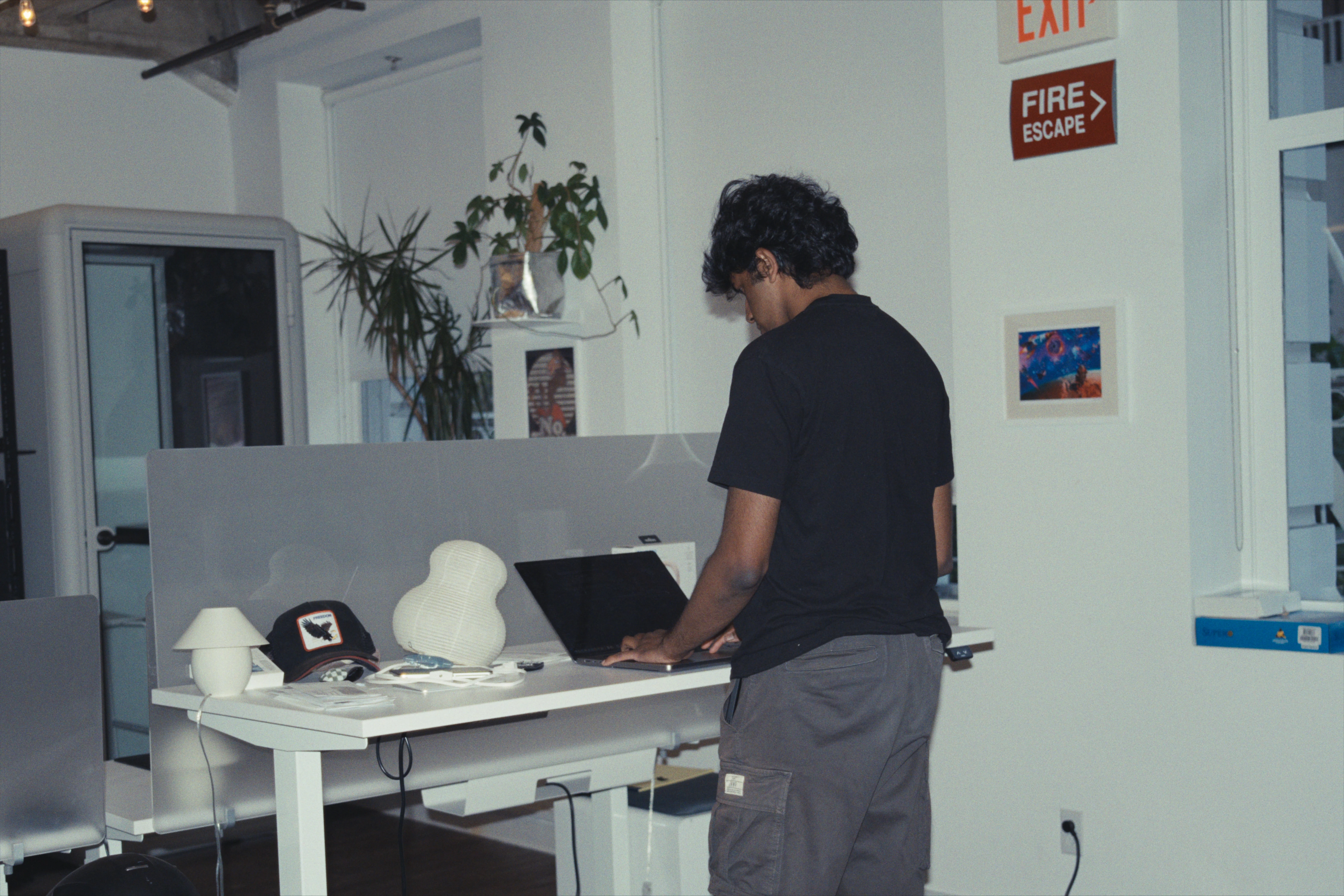
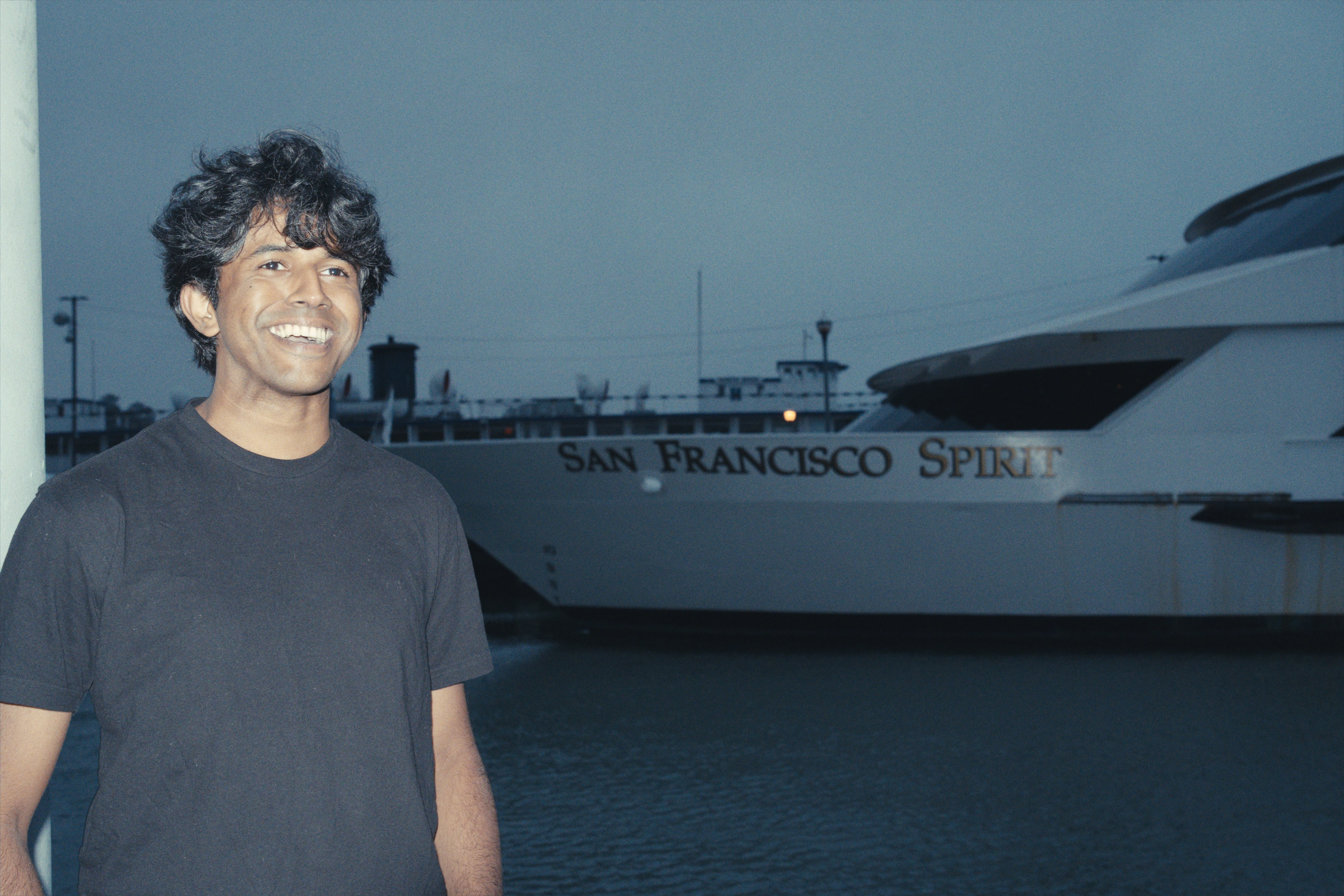
He’ll ask you what you’re working on out of genuine curiosity, not to size you up or to try to hire you. He’ll help fix a startup’s technical issues and refuse payment when offered. When he got a car, he referred to it as “our car” even though we don’t split the lease and I don’t even have a license. And every night, he’ll spend half an hour driving friends or even relative strangers home from the office.
It’s the reason he can close a $20k angel investment in 20 minutes. Our friend Patrick recently sold the app he’s been working on for a year, and now invests in startups on the side. While he was still in the early days, Subby let him crash on our couch. Subby doesn’t calculate out “oh this guy’s going to be rich one day let me help him so he’ll owe me later”, it’s just part of his character to help people in need. So when Subby sent me this text, I knew it was Karma for all the good things he's ever done:

Later that night, he added, "Patrick's a true angel, like sent from God type shi-. Right when I needed it."
Earnestness is a competitive advantage
Paul Graham talks about “how consistently successful startup founders turn out to be good people, and how consistently bad people fail as startup founders.” When someone’s doing something for the right reasons, the world aligns towards making them succeed. Potential hires feel good about working with them, VCs want to invest because they won't settle for a small exit along the way, and customers won’t feel the ick of being ripped off or having their data harvested.
Most things about running a business are learnable, but it’s almost impossible to fake morals if anyone's looking closely. It’s also incredibly hard to fake effort when you go to an office for 12 hours a day, 7 days a week for three years. At that point, you just have to assume Subby loves what he does. That, combined with the way he inhales machine learning papers and explains them to me, and how he casually got a Master's in AI while he was stuck at UCSD in the pandemic, makes it feel like he has all the qualities of a great entrepreneur.
When we met, I’d just gotten laid off and started making Youtube videos on a whim. Every day, I’d look myself in the mirror and wonder what the hell I was doing giving up a six-figure tech salary to make videos barely anyone would watch. And every day, when I was ready to stay home in bed because I was so down on myself, I’d get a text from Subby, ‘yo! you coming in today?’ and I’d go in. Even now when he works out of a friend’s office, and I’m at home procrastinating, I’ll get the call asking, “whatcha doing today? want me to pick you up?”
That consistent kindness makes me want to move mountains to make sure things go his way. He’s the only person whose happiness and success I want more than my own.
He’s talented enough to be making millions at OpenAI right now if he wanted, but I can’t actually see that for him, because I know how much he wants to help people and work on his own vision. It’s the same reason I could never see him retiring, because when he’s working on his own stuff, he glows like he’s never worked a day in his life.
The day after he quit his job and started working on Figment, his first time working on his own thing in two years, he told me:
“It felt like there was a fire in my heart that was put in a box and tucked away deep inside. And I knew it wasn’t lost, but for a while, I forgot what it felt like. And I’m just so happy now, because everything finally feels like play again.”
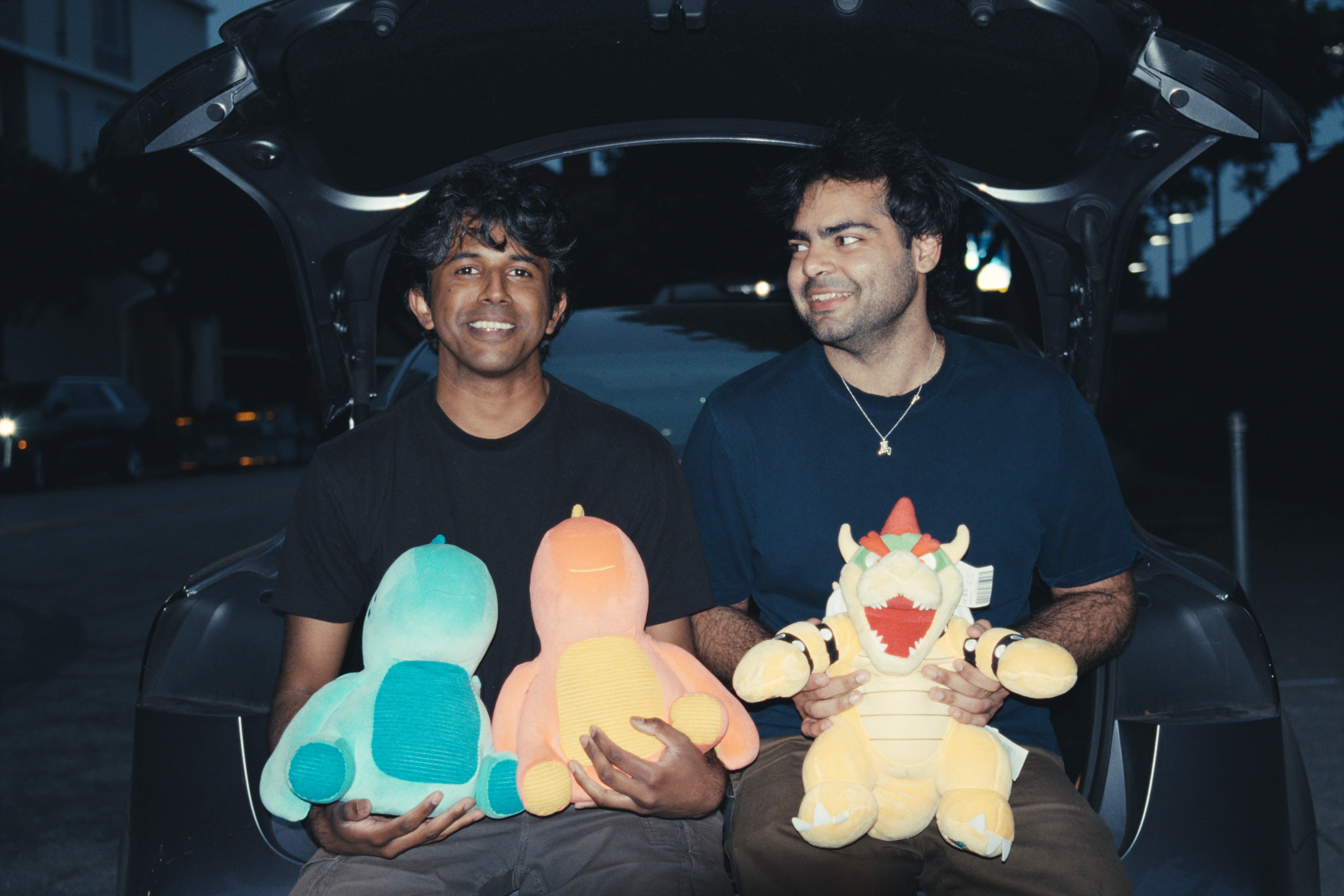
You can find Subby here. DM him and tell him I sent you.
Notes
- [1]
All our friends call him Subby now, because his Twitter handle is @subby_tech. We joke it’s short for “Subhash Technologies Incorporated.”
- [2]
More on his character: When he wound that project down, Subby and Dylan actually returned that $75k to their investor. No one does that. When I first moved to San Francisco, I met people who bragged about raising venture capital and using it to live a lavish lifestyle, claiming investors wouldn’t care because most startups fail anyway. And these were people who raised millions. But they paid their expenses out of pocket. Also, they wound it down because Subby was taking a job at Lexica, but he really pushed for Dylan to also work there even though initially, it was just Subby.
- [3]
He took a blood test once and it showed he was ferritin deficient with normal iron levels, which is commonly caused by skipping meals. Don’t do it!
- [4]
An anecdote from our friend Anish who was his coworker for a few months:
“One time at Bondu, we sketched out a whole re-architecture for deploying frontend, backend, everything. We thought it would take a few days.
I went to Costco with Fateen and we came back to Subby, sitting alone in the office with his hood on, blasting trap music.
He knocked out the entire thing while we were getting groceries.”
- [5]
A similar thing happened with Maroofy. Technically the first time I met him was for 2 seconds at a 3 day Buildspace event before we spent a summer together. But I barely remembered him, until I saw him win $25k for making the most progress during the weekend. Apparently he sat in the corner the entire time, hoodie on, trained a music recommendation model better than Spotify, put it on Hacker News and it blew up.
- [6]
His former boss at Lexica is now a researcher at OpenAI, likely making millions (complete speculation). Subby sent him this text:
- [7]
Only in code
Subscribe to Alexandria
Get new posts delivered to your inbox.