
Engineering Feelings
Donald Jewkes on telling Silicon Valley's stories
By Aadil Pickle
Mar 2026
PHOTOS BY KARINA BAO
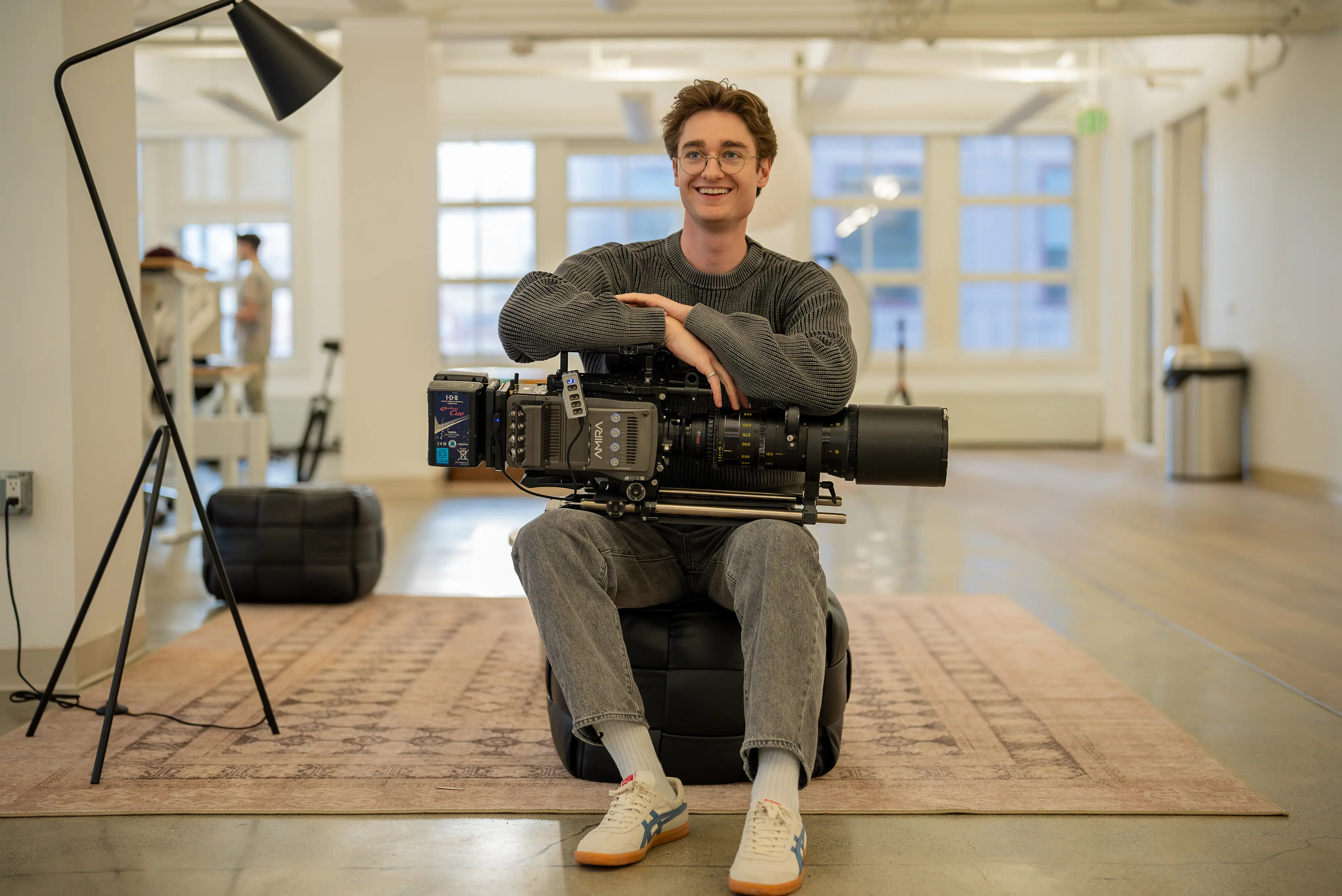
Silicon Valley is obsessed with storytelling right now. Founders are dropping six figures on launch videos pre-product. A16z new media is hiring the best twitter posters to help their PortCos with comms. AI can write code ten times better than it can a blog post. Building things is cheap, so software engineers are getting laid off, but attention is all you need so LA and NYC creatives are being imported in droves. A filmmaker friend joked that “San Francisco is a patch of grass and I’m a lawn mower.”
In this era where attention is currency, there’s no one who thrives more than Donald.
He’s an engineer turned filmmaker who's worked with Cursor, Physical Intelligence and Meter. But he’s been behind the scenes for around 20 other startups over the years, influencing their creative direction, brand or launch videos in some way. There’s no point in building the future if you don’t tell anyone about it, so his goal is to decipher the weird yet incredible world of Silicon Valley and spread its stories to the masses.
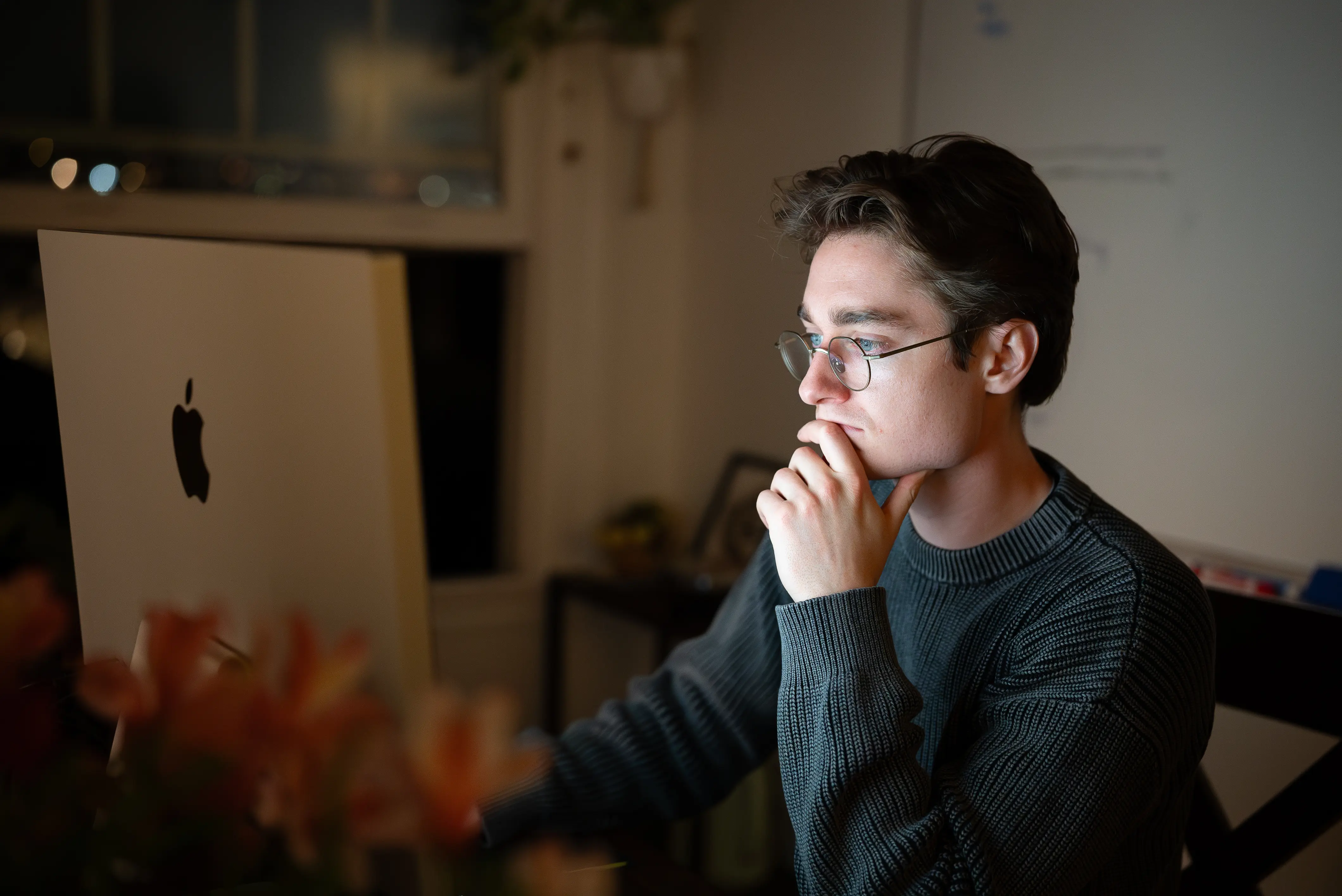
I spent a week with him to tell the storyteller's story. Somehow, he got me to talk most of the time even though I was the one writing about him, and saw him do the same to everyone else. He pulled dialogue out of a camera-shy roboticist with ease and prompted an AI researcher to excitedly rant about why now is the best time to move to San Francisco. He’s really damn good at getting people to talk, but somewhat quiet himself. I couldn’t help but think he was subtly influencing my narrative as I was trying to form it.
Donald grew up far away from anything tech or film related in The Middle of Nowhere[1], Canada. In a town of 5000 people, his grandpa started the first store that sold cameras. Donald got his hands on one and started making short stop motion films. His first documentary came from a sudden call to adventure in university where he cold called 40 fishermen and biked 300 miles to interview them about how their town changed after a national park was built there.
After stealing L’Étranger from the library at 12 years old, Donald developed an interest in existential philosophy and an on/off relationship with nihilism. “I think any kid who grows up in a small town and doesn’t fit neatly into one of its groups starts to look for things beyond it,” he said. He got over it in college through therapy, gratitude, psychedelics, and realizing “being happy is a skill issue”.
Halfway through college, he worked as a founding engineer at his cousin’s biz dev startup selling to biopharma execs. After they sold that company, he felt called to make films again. An Uber driver once mentioned if Donald ever visited Morocco, he should stay with his dad on their mint farm. Donald was there a week later to make a documentary and catch a vibe. His following films were stories of squads. After living in Vancouver for years and meeting a bunch of cool people who had never talked to each other, he hosted a tech demo night to bring them all together. As a love letter to the city and all his friends in it, he put together a behind-the-scenes documentary. Months later, he was in Waterloo pulling three all-nighters to do the same for a 2,000 person demo night his friends hosted.
Subscribe to Alexandria
Get new posts delivered to your inbox.
Finding stories worth telling
Watching Donald work feels like seeing a puppeteer in action. He’s a meticulous planner that no one sees, but everyone who works with him can feel his impact. The Waves launch video was the epitome of that.
Waves was a startup making camera glasses for streamers. They’d have all-day battery life and an optional indicator light, which pissed a lot of people off because recording without consent is illegal in most states.
At the time, iShowSpeed and Kai Cenat were blowing up. Friend.com’s always-on AI recording device billboards were designed to be graffitied. Cluely had “cheat on everything”, Waves had “record in stealth”. No one knows what it means, but it's provocative.
Algorithms reward engagement above all, and people are more likely to comment on what they hate rather than what they like. (That’s what the like button is for.) Controversy means views, views mean dollars. It gets the people going.
As an experiment, Donald decided to make them a (pre-product, pre-revenue) launch video to see how much he could blow up a startup from zero. He and everyone he worked with engineered it to be a banger.
He knew that they’d have to build up a mystique around the Waves founder beforehand, so he wrote a Twitter campaign for him centered around his CTO disappearing to Shenzhen. He called on a friend who’s studied every Mr. Beast podcast to help write the script. They sorted through hundreds of actors and ABG extras before landing on their cast. He rewatched City of God and Casino Royale to analyze how they were shot, then borrowed the camera[2] used to shoot Skyfall.
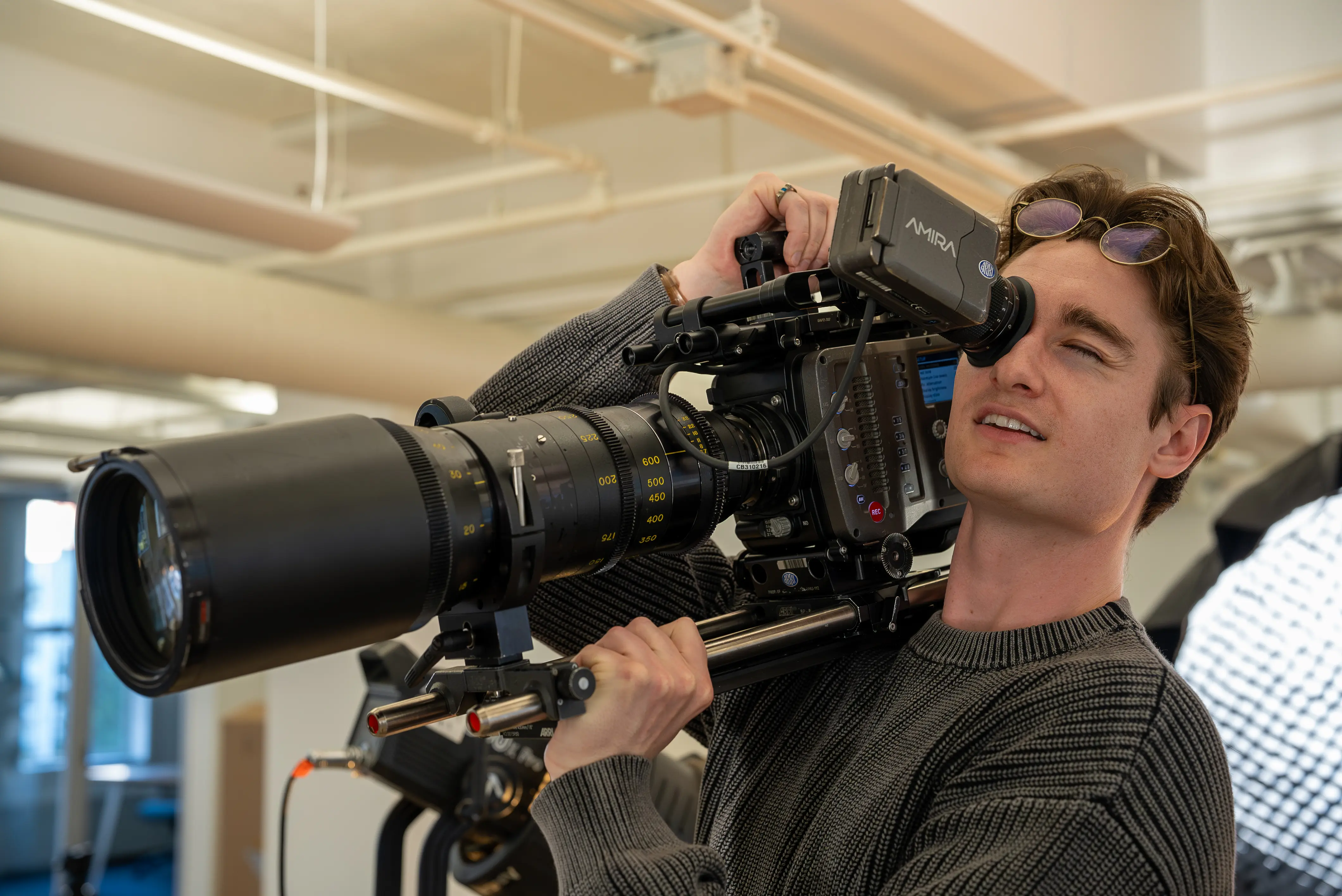
The video blew up. Tech Twitter talked about it for a week. They ended up with 33 million views, thousands of preorders, scoldings from Zuck and Casey Neistat, and meetings with every VC in the valley.
A year later, Donald still gets weekly inbound from startups trying to hire him because of the Waves video. He never expected it to get more than one or two million views, and doesn’t really think about it anymore. For him, pursuing virality isn’t the point.
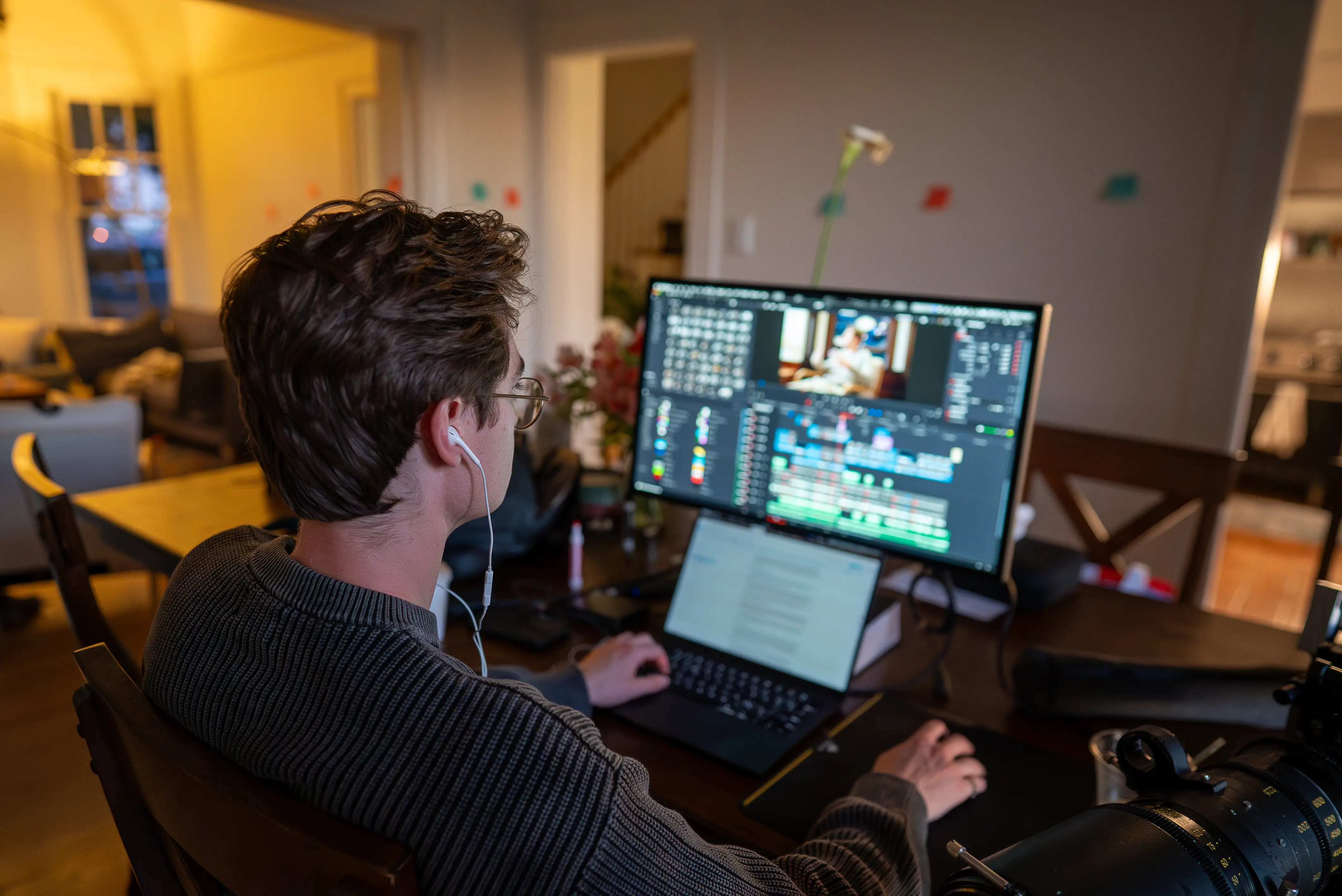
“My favourite part is that moment everything comes together in the edit. When the story becomes clear. I think you understand this as a writer,” he said.
“Yeah. You have nothing until you have everything,” I responded.
These days, he's called towards documenting the absurd and wonderful parts of Silicon Valley. That starts with telling the story of Jmail, where a ragtag group of hackers got together to make the Epstein emails accessible to the world.
When I asked what part of their story he's drawn to, he responded, “I think Jmail is interesting because none of the people are regular, even if they describe themselves as such. You have eclectic top talent that all came together and decided this was worthwhile prioritizing over their startups / research. It's fun because everyone is playing their own game, together."
Even though Donald could make enough money from startups to fund his own movie, he’s retired from doing launch videos. He wants to tell the stories he’s drawn to without having to do client revisions.
“I miss the days where 200 likes was a banger. Looking back at my old videos there’s so many things that are technically awful, but have way more soul than much of what I see.”
Engineering virality is like the Midas touch; as much of a gift as it is a curse. His videos today are beautifully shot and edited. “Another banger from the GOAT” is what I’ll comment under anything he makes and keep scrolling. But I watch his old videos and I can’t stop smiling. They feel like something I’d find scrolling YouTube at 2 am with only 56 views, but each of those 56 people felt like the video was made just for them.
Being a Tier 1 Emotional Investor
For the Waves shoot, the crew he assembled felt like uncut gems. At his core, Donald wants to give his friends what his cousin gave him: nepotism.
He got his friend James, a former biologist, to help direct and rewrite the script. James pivoted into making launch videos for founders after working with Donald. Andrew, a 19-year-old software engineer, was Donald’s right-hand man from the beginning. Waves was Andrew's first time producing a film, and now he makes YouTube videos full-time. His friend Scott helped secure a mansion for the Waves shoot. They also lived together for a few months in another mansion Scott put together. Donald helped Scott get his first job out of college at an AI company in San Francisco.
Maybe another filmmaker would’ve hired a crew with more experience, but Donald sees people’s potential more clearly than they can themselves.
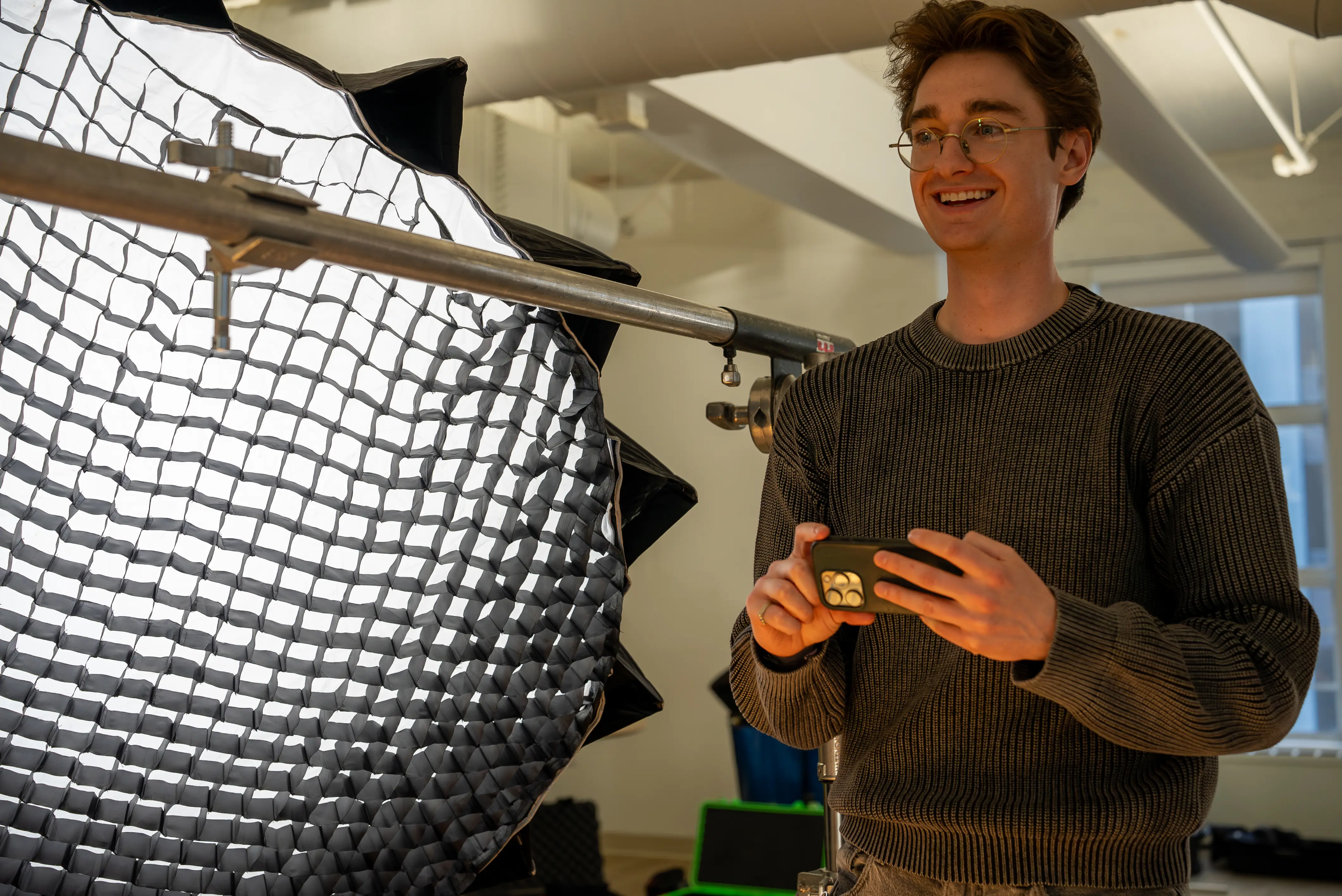
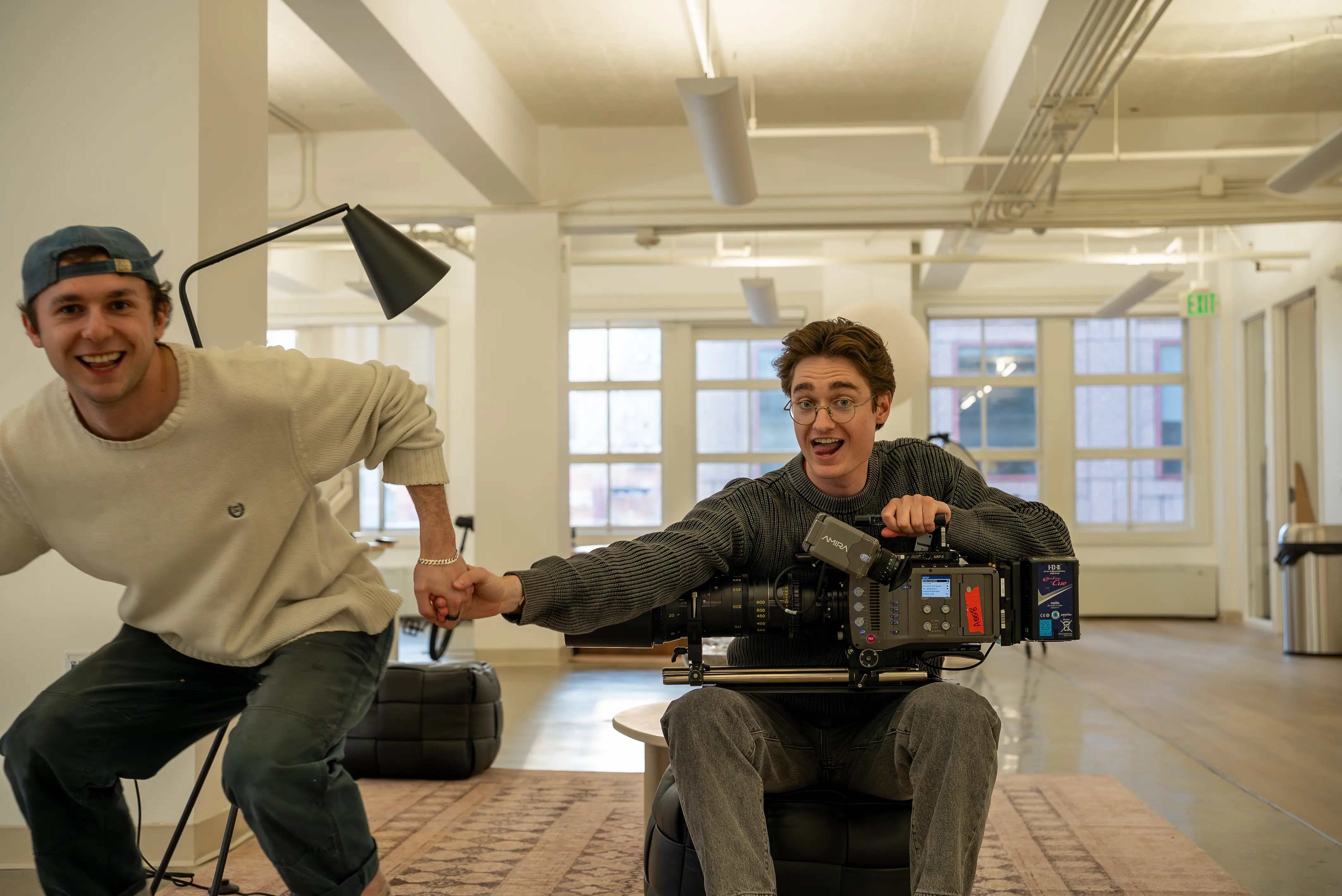
It’s not just Waves. When he was running the Vancouver demo night, he made his friend Clo in charge of designing the commemorative zine for 200 people. Clo was a forensic science student who had never designed anything before. I asked him why he gave her that responsibility. "She just really wanted to do it. She said 'Trust me, I got this.'" Clo now works as a full-time product designer.
Donald also has a habit of getting people to take him under their wing. He got into philosophy through his friend’s dad who’s one of the top philosophy professors in Canada. In his first year of university, he took an anatomical painting course and ended up getting private lessons from his professor. Barry Michels, a celebrity therapist, offered him one-on-one sessions after Donald snuck into one of his seminars. He chose computer science as his major because his cousin, a video game programmer, convinced him coding would be more useful than philosophy or architecture. That same cousin gave him his first software engineering job out of college.
Seeing Donald, you just always want to help him out. It’s probably due to two qualities:
- Donald is the best listener I know. Anything you say gets his full attention.
- He pushes past his limits, or rather, doesn’t think of himself as having any. I’ve never heard him express even a little self-doubt or self-rejection.
When I asked him how he’s such a good listener, he responded simply, “I only pay attention when I’m interested. Isn’t everyone like that? Like, you should see me in a boring meeting. I can’t stand using my time poorly.”
The seeming lack of limits probably comes from what Donald calls “tapping into source”[3]. The way he describes it sounds like taking the Limitless pill. “I just know what to do and how to do it. I can see all the steps in front of me. Everything falls into place and I just have to execute.” He offered no further explanation and said that I probably do it too without realizing. I’m not sure that’s true.
Donald has been meditating for seven years now. At his peak, he spent three years staring at an imaginary blue dot every day. He also got some coaching on "integrating the shadow"— a cognitive behavioural therapy technique that’s supposed to radically increase self-acceptance. As a result, he feels so present and open that one of his friends told me “his stare is so intense, it feels like if you look into his eyes, all your problems are solved.”
Living between two extremes
"Anything good I’ve made was on a bender. I’ll pull two or three all-nighters every time I have to edit a launch video."
“I once survived for two weeks off coffee, limeade, and brie.”

Donald seems to have energy without sleeping, and almost gets more creative juice the less sleep he has. I don't know how he does it. Part of it is sprinting and borrowing time from other days for recovery when he really needs to finish something. I’m sure another part is caffeine. Maybe he's gained strength from all the time he’s spent seeking out coaches and overcoming nihilism. If everything is meaningless, so is the pain. There’s no limits because even if he feels one within himself, what he's trying to accomplish is possible in the universe. He just has to tap into that energy. The pain is temporary and will be over once he’s finished the current adventure.
On our first day together Donald showed me this meme:
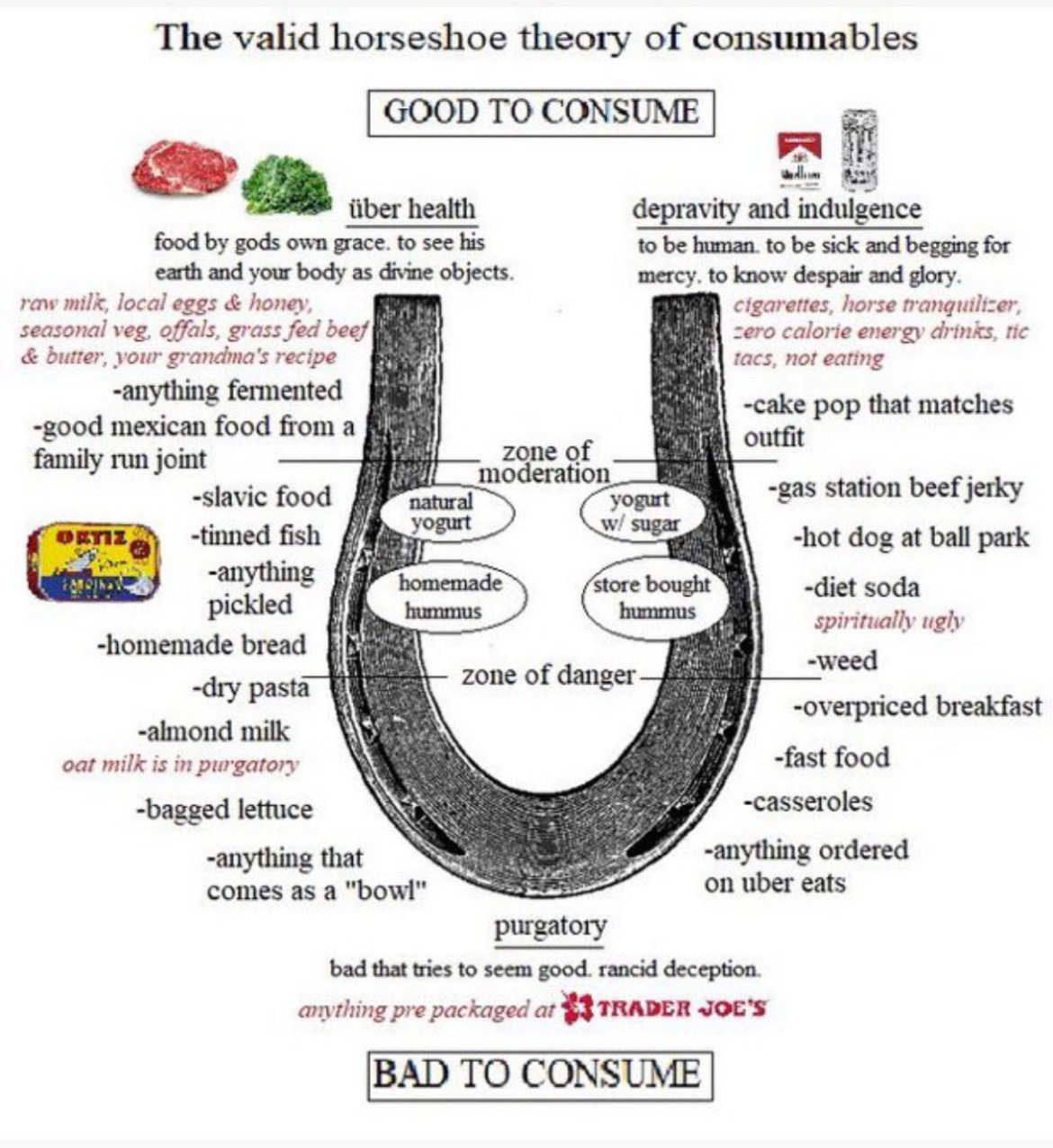
If you inspect it closely it makes no sense. I felt bad that everything I liked fell into the zone of danger. I still don't understand why a matching cake pop is "pure indulgence". But throughout the week, I noticed Donald intentionally lives his life by bouncing between the two ends of the horseshoe.
It’s not enough for him to be a regular friend. He’ll conspire for your success if you’re close to him. He’ll give you his full attention every conversation. He’ll teach you everything he knows and encourage you to develop your nascent talents. He’ll basically adopt you and nudge you into a better person.
It’s not effective for him to have a regular sleep schedule. Great creative work is done through depravity and indulgence, so it’s only ever five or eight hours[4] of sleep a night. Nor a regular diet. I never saw him finish any of the slop bowls we ordered for lunch, but I did see him drink limeade straight from the jug every day. He made me incredible eggs on toast with fruit for breakfast, and also had me try alligator from a greasy (delicious) Cajun place for dinner.
He snuck into Half Dome at midnight and got stalked by a mountain lion. He’s an accomplished triathlete who averaged less than 5000 steps per day the week I was with him. He's the most alive when he either treats his body like a temple, or an amusement park.
His taste for great stories is just an extension of his yearning for an interesting life. A house party planned by AI. Bedroom nuclear fusion. Blimps that control the weather. The stories that compel him are the ones so insane that they could only happen in Silicon Valley; the same place that inspired a documentary disguised as a sitcom.
In Zen and the Art of Motorcycle Maintenance, Robert Pirsig[5] says:
You want to know how to paint a perfect painting? It's easy. Make yourself perfect and then just paint naturally.
The way Donald makes interesting films is easy. He lives an interesting life and captures what calls to him. It’s all his movie. We’re just living in it.
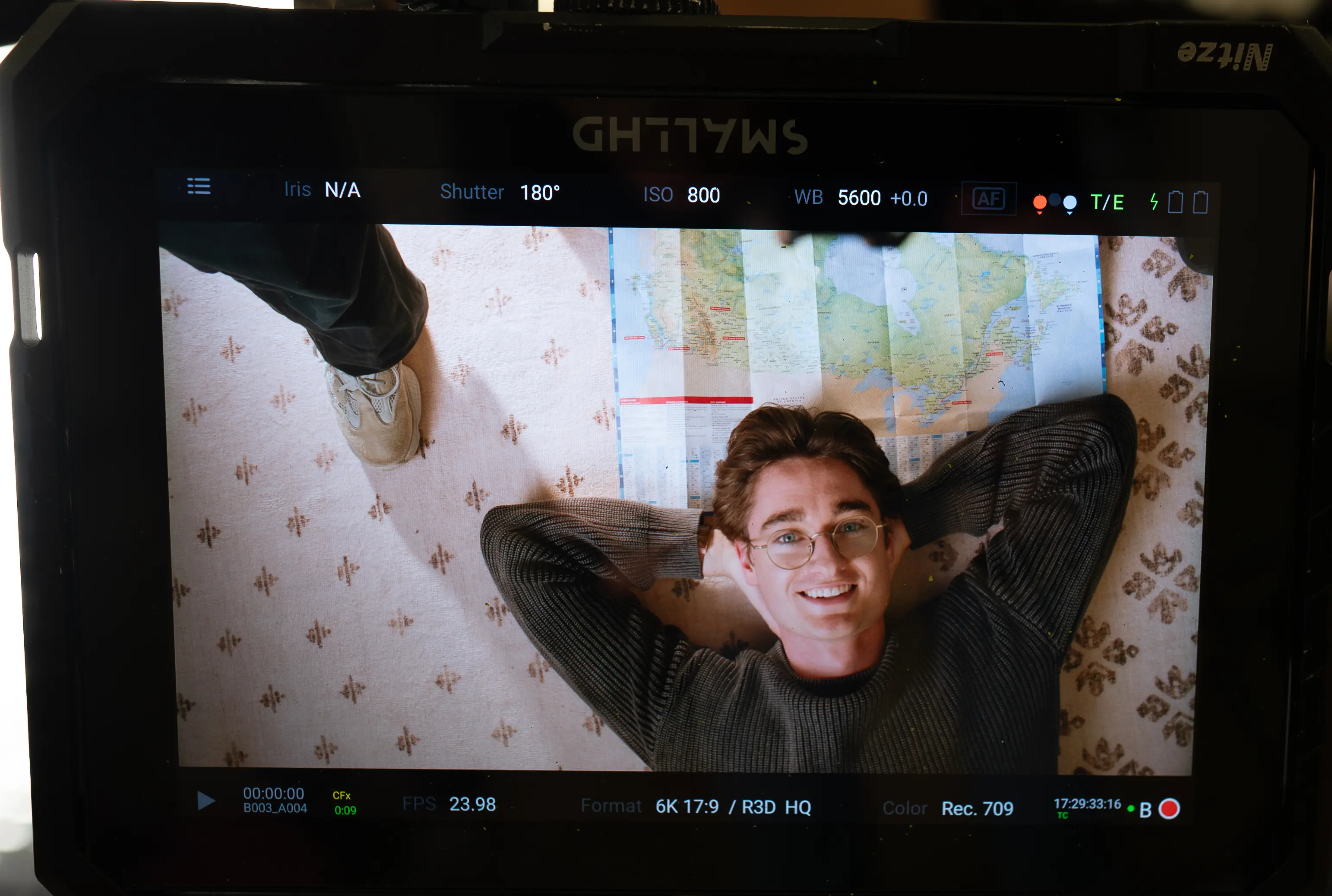
You can find Donald here. DM him and tell him I sent you.
Notes
- [1]
Actually Antigonish, Nova Scotia.
- [2]
I compare it to the Holy Spirit in Christianity or Naruto learning senjutsu.
- [3]
An ARRI Alexa.
- [4]
Donald claims he slept 8 hours the days I didn’t spend with him, but I never saw it, so can’t say.
- [5]
I actually got this quote from the Paul Graham essay How to Get Startup Ideas funnily enough.
Subscribe to Alexandria
Get new posts delivered to your inbox.