
Inventing the near future
Brian Machado on building a $1000 general purpose human-ish robot
By Aadil Pickle
Dec 2025
PHOTOS BY KARINA BAO
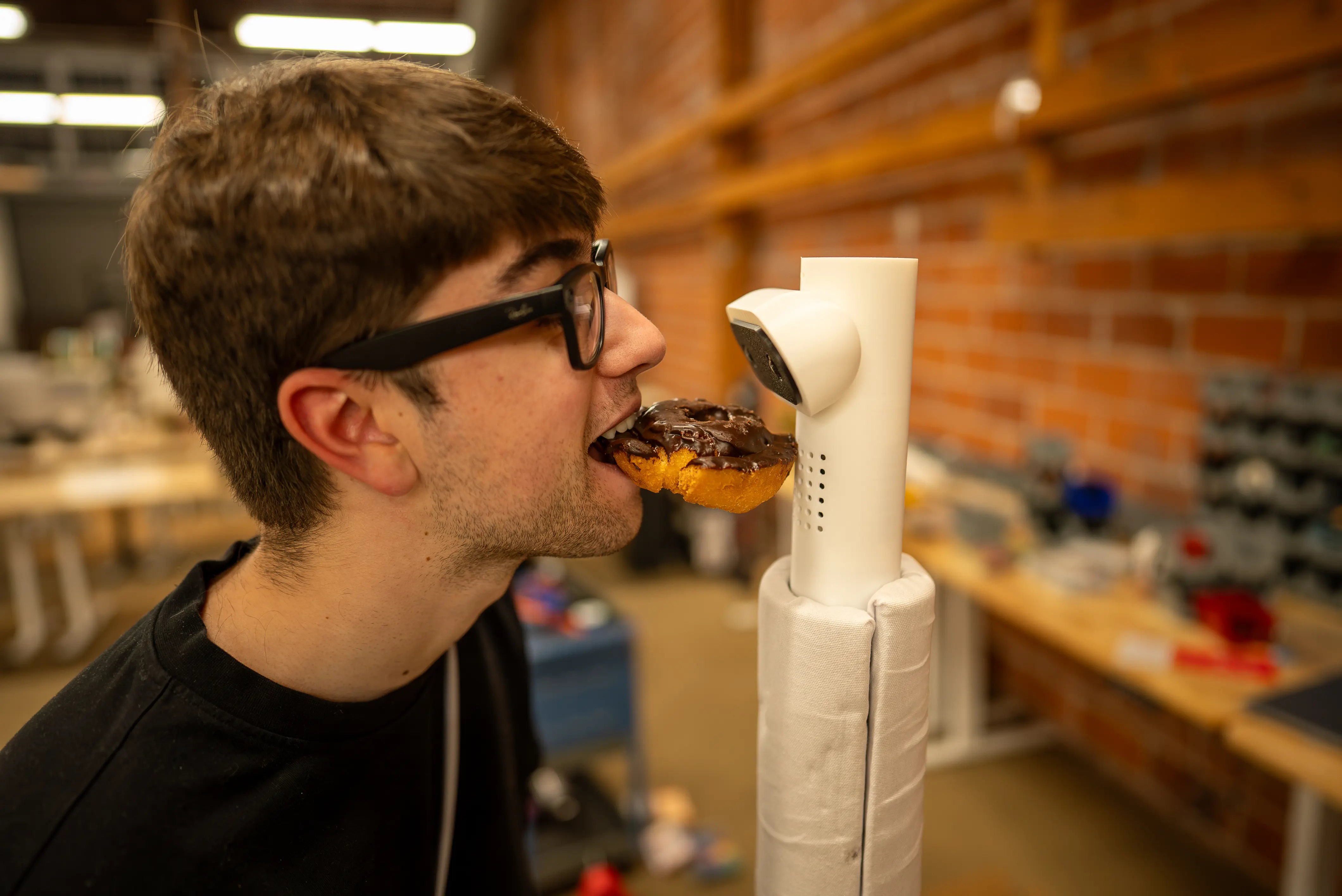
My friend Brian has a very interesting take on money. In that, it always feels like he doesn't have any, even though he probably should. He's an incredibly talented engineer who worked on Uber self-driving when he was 19, and has raised millions, yet is three months behind on his rent[1].
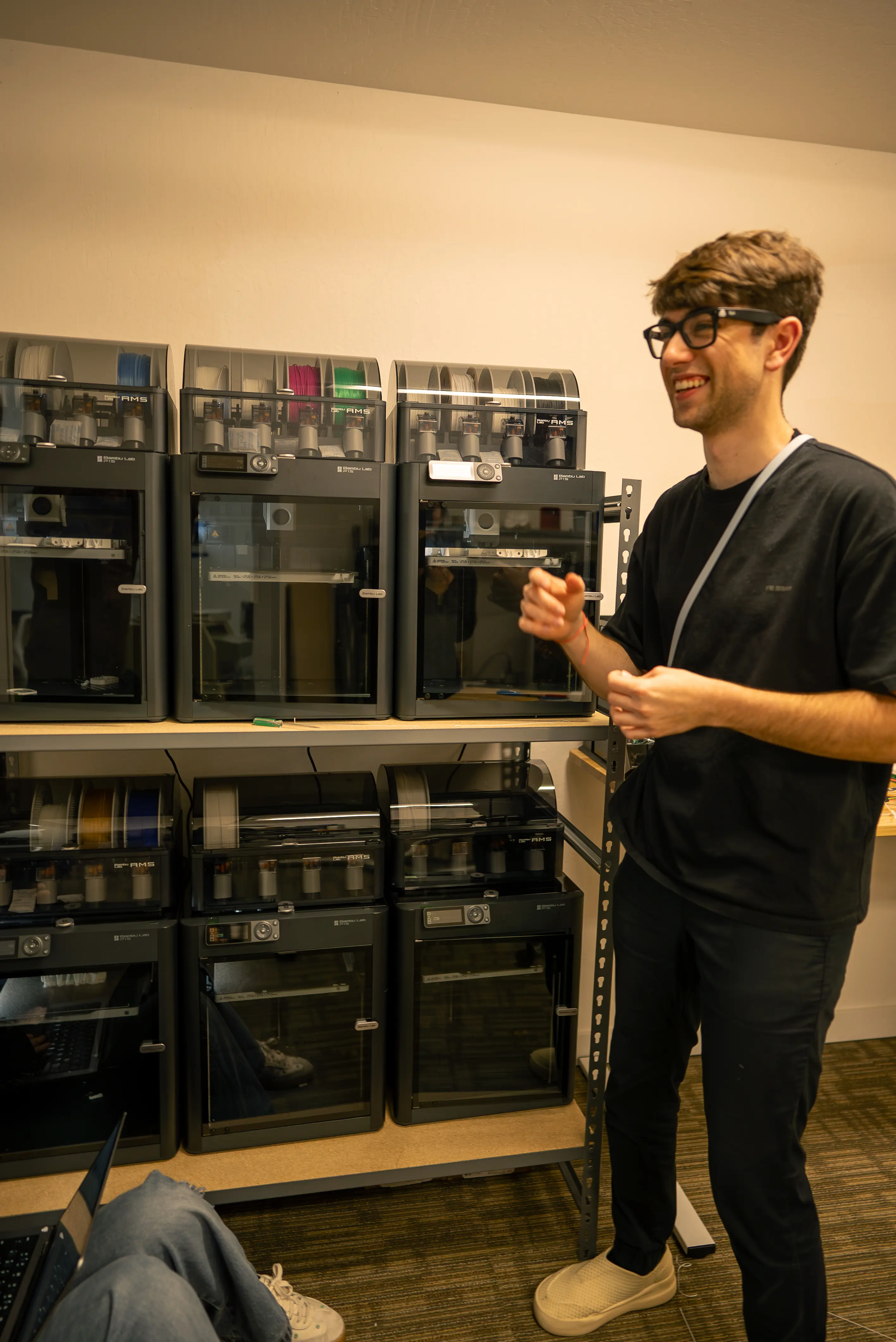
When I visited his apartment in Waterloo, every corner was filled with hardware parts and 3D printers.
I asked: "Why do you need four 3D printers?"
"So when I design new parts, I can make 4x as many iterations."
Brian's philosophy is that if he spends all the money he can on learning, he'll make all of it back after that learning compounds. If buying four 3D printers means he can print a new part with four little tweaks and learn four times as fast, it's a no-brainer.
After graduating, he moved to San Francisco and started renting out a factory to make robots full-time. It's pretty much the same as his apartment, but scaled to 5000 sqft.
"Look at this thing! Do you know all the stuff I'm going to learn after taking this apart?" he says, excitedly holding a Unitree robot dog in his hands.
"Because I don't! But I'm sure it'll be a lot!"
He's building a $1000 modular robot for people who are mildly technical. He calls it "like Replit for robots". I call it "Adult LEGO Mindstorms".
Today he explained to me how he wanted to replace the foam on the robot with a 3D printed rubber casing so people could print their own attachments for the bot. He then handed me a 3D print that somehow felt soft, made with a rubber that foams at high temperatures.
I later learned how he came up with it when he randomly said:
"Who would have thought that by buying these 3D printed shoes, I would learn to 3D print part of the robot?"

Subscribe to Alexandria
Get new posts delivered to your inbox.
Inspiration is everywhere
Brian is kind of a material girl when it comes to consumer hardware. He'll buy anything he thinks he might be able to learn from, even if he can't see an immediate use for it. He bought every retractable USB cable from Amazon for inspiration on how to design a robot arm that can freely move up and down. He also has the highest monthly Cursor bill I've ever seen, and $200/month subscriptions for both Claude and ChatGPT. Even though $200 may sound like a lot for SaaS, considering ChatGPT costs billions of dollars to train and serve, with Brian's level of usage, he's actually the one profiting here.
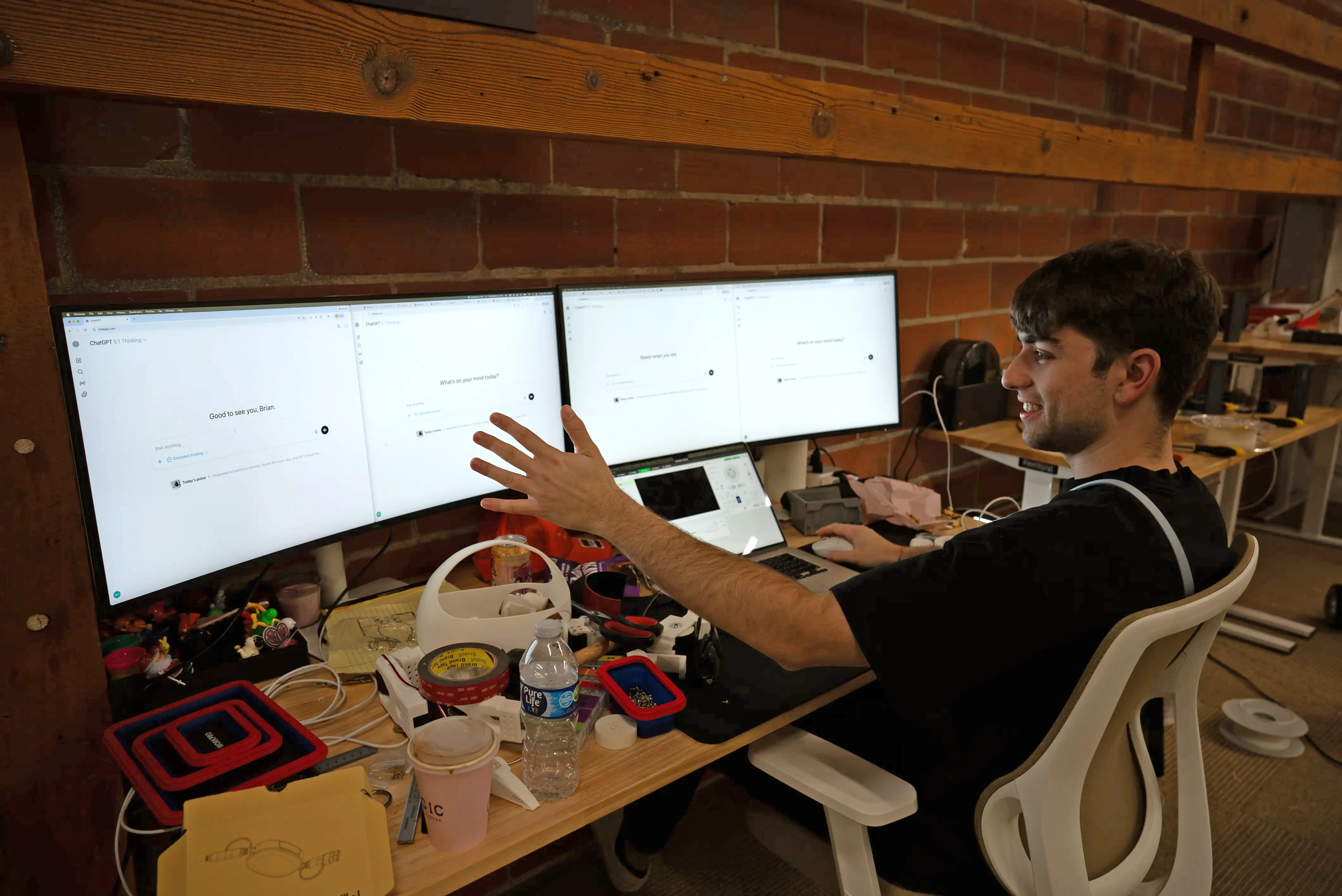
At any point, Brian will be multitasking three things with three different AI agent platforms. I walked into the office one day and he was prototyping an idea board in Replit. He mentioned he'd spent a few hundred dollars in credits on just that app.
I asked, "Why do you even need this?"
"Because if I can connect ideas even ten percent faster, think about what kind of productivity gains that'll lead to in the future. Everyone studies compound interest. I'm compounding ideas."
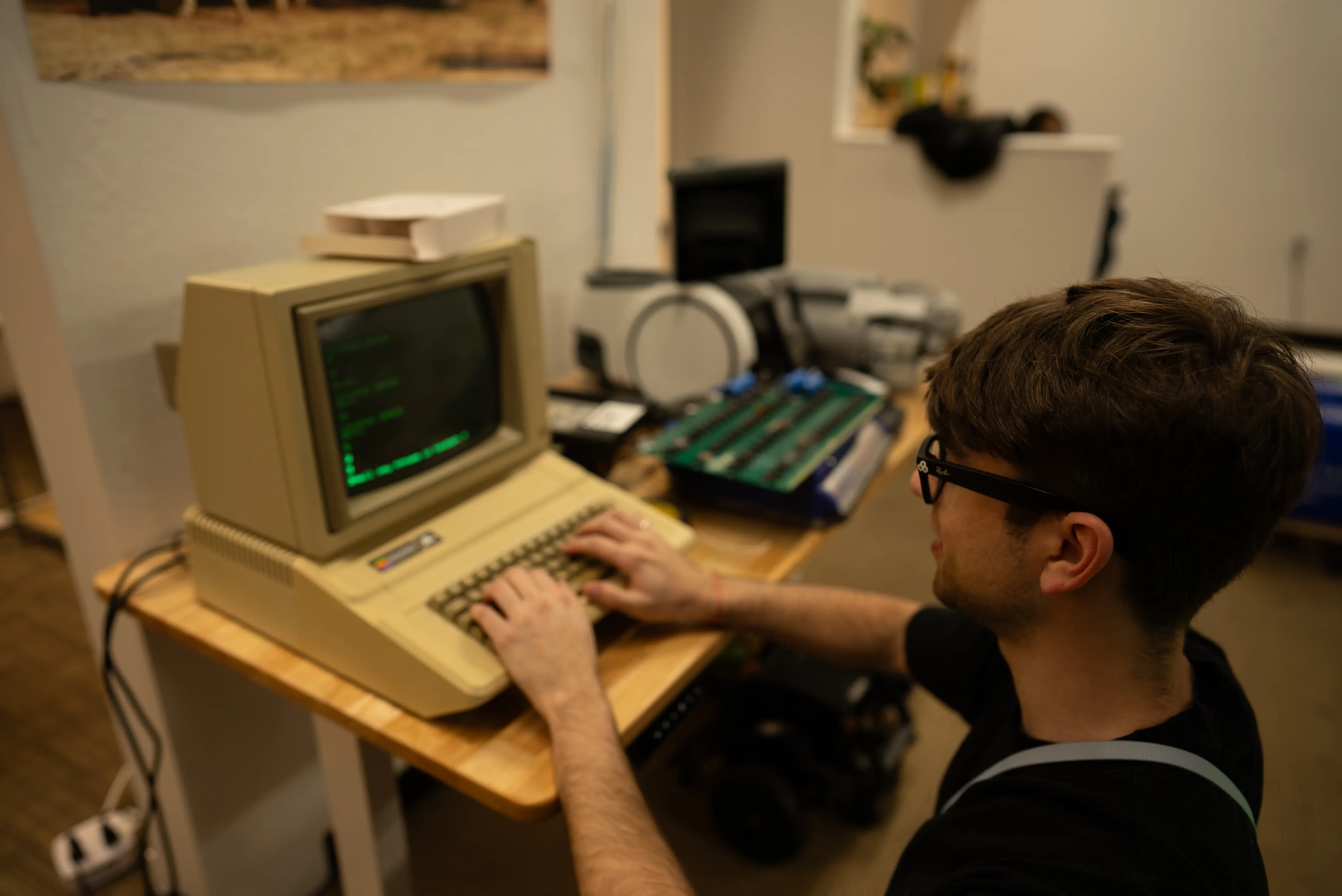
Brian is probably the person that's changed my mind the most in the shortest amount of time. Initially, I thought a lot of what he did was pretty stupid. When I first met him I thought, "Why the hell does anyone need an Apple II in their office? Or $100k worth of Jetson Nanos if they're not going to be shipping orders for the next few months? Do you really need to roll your own Roam Research? Why waste so much time and money all in the name of inspiration?"
"We are literally building the Apple II of robotics right now. Look at this thing: it doesn't do anything. Seriously. Try doing something on it right now."
"But why the Apple II? That was 40 years ago. Surely you'd rather be making the MacBook of robotics," I told Brian.
"Because that was made with two people," he said, gesturing to the 40-year-old hunk of junk. "We're just two people who need to understand how to make the Apple II, so one day we'll have the knowledge to make the MacBook down the line. In fact, no one can make the MacBook of robotics today. Most robots don't actually do anything useful. To the right people back then, the Apple II changed everything. But even the right people can't actually program any of the fancy looking robots today to do what they want. Even Tesla Optimus can't do anything."
"Hold up. Surely the Tesla Bot can do something."
"Have you seen it do anything in the real world?"
"No... but I'm not a robotics expert and they just haven't launched yet and their demos are cool and—"
Brian cuts me off. "They've been working on that project for years and they still can't get it out. I know because I literally built the charger that the bot walks backwards onto. Elon literally has infinite money, infinite manpower from anyone at Tesla, SpaceX or Neuralink, and basically infinite resources yet he still can't make a useful general purpose robot that people can use today. No one can. Not because there's not enough people working on it, but making novel creative advances requires building something and seeing how it feels. I have a pretty good idea of how something will work before I design it, but I can never know for sure until I see it in real life. You have to iterate into it. You have to have a team that knows how to build the Apple II and carries that knowledge down to making an M4 MacBook."
After spending a week in the factory, I started questioning why everyone else doesn't do what Brian does.
"If Bracket Bot can be worth $100 billion dollars, then thousands of dollars of inspiration to get that billion dollar mindset is nothing"
The way Brian sees it, great ideas are everywhere. He just needs to surround himself with enough of them that one day, after absorbing everything, he'll start having great ideas of his own. If people spent millions of hours and dollars themselves making incredible things, and he can use them for 1/1000th of the cost to make his product ten percent better each week, it's a steal.
Too passionate to fail
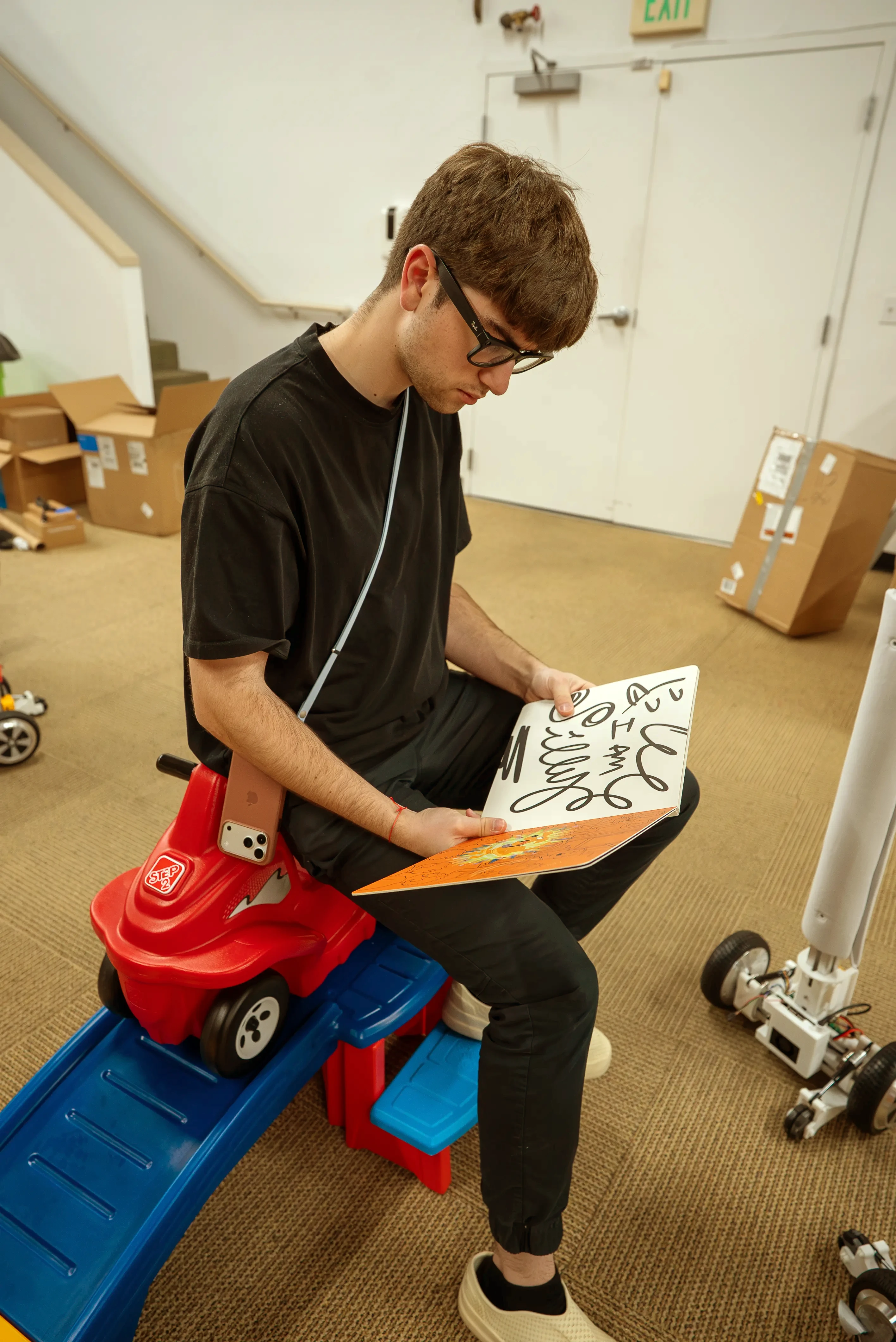
I came back to the office a few days later and Brian had a six-foot-wide poster of "The Bitter Lesson" by Rich Sutton on his wall, along with a Fisher Price children's play buggy with a Bracket Bot sitting in the seat. My parting thought the day before was: "If he wins, they'll make documentaries about him[2]. But startups are hard, especially at the early stage, so he's probably equally likely to fail and fade into obscurity forever." My friend Donald, a documentary filmmaker, was sitting beside me and said, "I need to get my clips now before they're potentially worth millions in a few years."
The way Brian sees it, there's no way he can fail.
"A company being too early doesn't exist. Just work on your thing longer until the world is ready for it."
If things look like they're going to go to zero, I think he would take it in stride and make the right changes to stay default alive. For all he spends on AI agents, antique computers and children's toys, all of that is a blip in the grand scheme of things. If he had to, he'd cut all that out and focus up in an instant if he thought that was the best way forward. It just isn't right now. Whimsy, creativity, and invention are all needed to push general purpose DIY robotics forward, and so is grit. After taking Mandarin 101 in college, Brian was so inspired by the Chinese way of working[3] that he's been pulling 14-hour days and sleeping on his factory floor for months.
The reason I wouldn't bet against Brian is that he has an incredibly high learning rate and loves this sh*t so much. He built a CNC machine for his high school robotics team at 16. He's worked on Uber's self driving cars, Google X robots, Tesla Optimus, and designed his own high-speed motor powered wheelies. He had a previous startup called Globe Engineer that was like a better Perplexity (à la his domain perplexity.sucks). He had a viral launch and was getting millions of monthly users then shut it down because "[he] couldn't convince people to work on something [he himself] couldn't get excited about." He doesn't have that same problem with Bracket Bot.
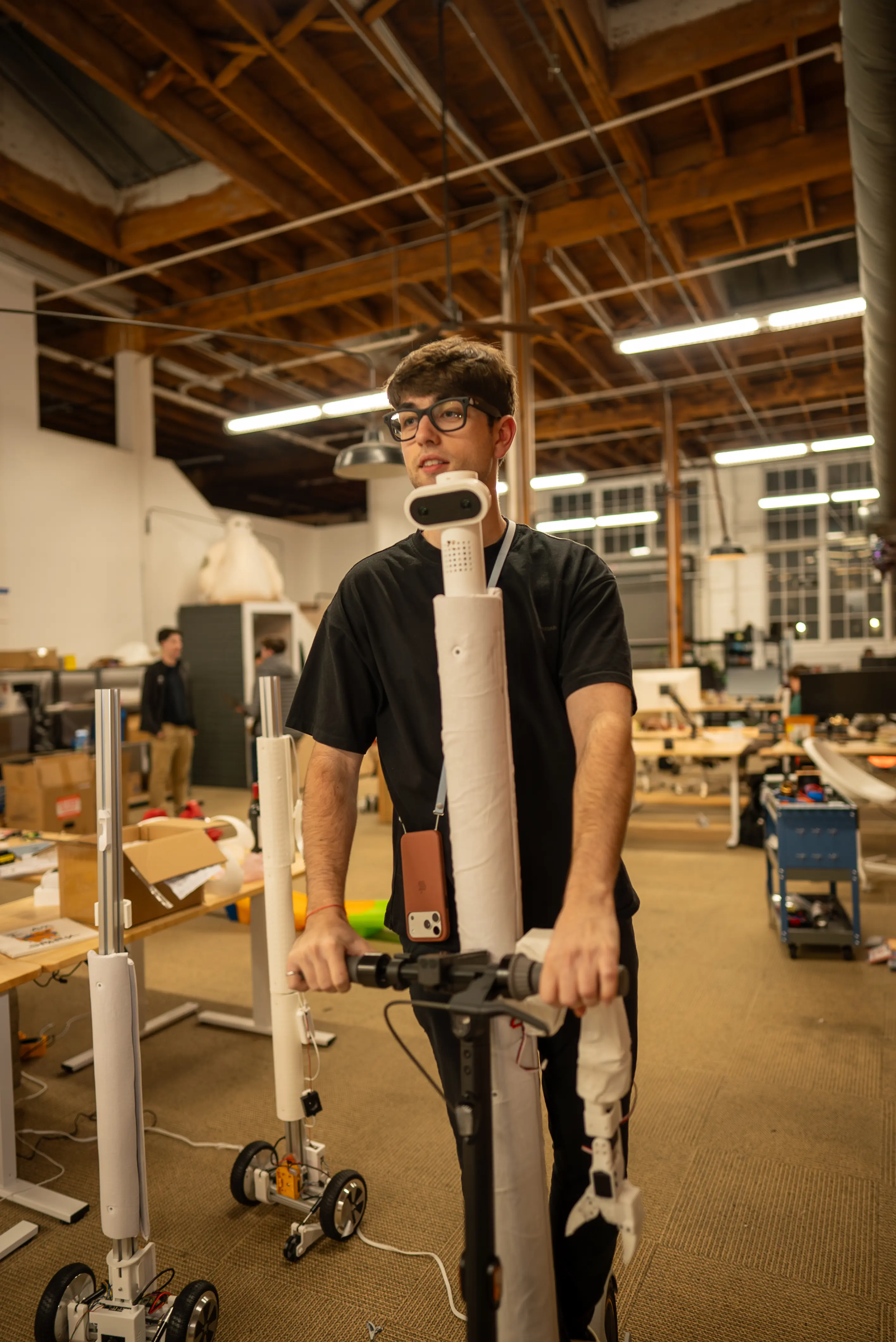
That doesn't mean he doesn't make mistakes. Yesterday, he told me that he spent the last few months making the Bot in parts so he could ship it in a small box and people could assemble it at home. This took a lot of time and effort without improving the Bot at all, but they thought shipping a tall and long box would be way too expensive.
Except... it's not.
Brian saw that his Flexispot desk had free shipping and was roughly the same size as a Bracket Bot, which led him to check how much shipping would be for a box with similar dimensions, and it was fairly cheap. So rather than check the cost of shipping a bigger box, Brian spent months modifying his designs on a false assumption.
I've met CEOs with big egos before. People who would ignore a mistake they've known about for months, assume their product is better than it is rather than focus on fixing it, or people who make performative progress just to get them to the next funding round. I think it would cause Brian physical pain to live with something he knows can be improved, even if it looked fine to everyone else. He's someone who peels back the furniture cabinet, looks at the finishing, and thinks about how to change and improve it. That compounded over the past decade of learning is exactly why he's able to make such an impressive product today with just a team of two.
Build something you (and devs) want
Years ago, when Palmer Luckey was making Oculus, all the VR headsets on the market were either super expensive or weren't very developer friendly. You couldn't really do anything with them, because no one wanted to or could afford to make apps for them.
While the Oculus Rift initially released for consumers at $600, four years prior Luckey released developer kits for $300 each with SDKs better than anything else on the market. The combination of a good-enough headset that made it easy for developers to write apps is what led to its success on release, because people could actually see what VR was capable of.
This is exactly what's so exciting about Bracket Bot. There is no low-cost developer friendly general purpose robot on the market. 1X Neo is incredible but also a $20k closed source teleop'd dishwasher. I'm sure it'll be incredibly useful for lots of people - in fact I actually pre-ordered one. But as a coder, I'm much more excited about Bracket Bot. I want to make my bot do things the creators never even thought about rather than selecting from their list of options.
The only way to make massive progress in any field is by opening it up to smart and creative people. Apple made the iPhone but my mom would never use it without Youtube or Whatsapp. Dishwashing is cool but my mom really has trouble with cleaning the bathtub. We have no idea what the killer use case for humanoid-esque robots is, and we won't until developers can build something and see how it feels on their at-home robot then show it to other people.
Brian knows this. So while everyone is focused on anatomically precise finger movements, he's focused on making depth perception work on a $15 camera rather than the industry-standard $400 ones. He wants to give the same feeling of seeing something in front of him and unlocking some hidden creativity deep away to everyone who's ever been even mildly interested in robotics. Something clicked in my brain when I spent 10 minutes messing around in Cursor with the Bracket Bot SDK loaded in context and was able to get it to follow me around, identify my face, and say "Yo!" whenever it saw me.
Brian said this to me on day one:
"You don't hire people to do creative things. You put creative people in a room and let them do what they want."
Then, at the end of the week, he said: "I was always confused at how every product looked so neat on the outside and you had no idea what was going on when you opened it up. I learned CAD, MechE, EE, and how to code so I could make stuff that I wanted. Things that look neat on the outside that you can actually do stuff with but if you want to go a level deeper and change them, you can."
After spending the week with him, I really believe no one else can do what he's doing, and probably won't. An electrical engineer can build a robot with better chip design than Brian can but would likely compromise on the software experience. A software engineer could write cleaner code but wouldn't understand how the hardware components work well enough to make the SDKs useful. A team with complementary skills could get together and all do what they're good at, but switching costs and loss of context across members would eventually catch up to them.
Only someone like Brian who's been doing this for the past 12 years can understand what needs to go into a low-cost, easy to program general purpose robot. He doesn't care about money or time spent. He's making it for himself, a creative kid with infinite ideas stuck in a grown man's body, and won't stop until he's satisfied. The rest of us just happen to be allowed to buy it when he's done.
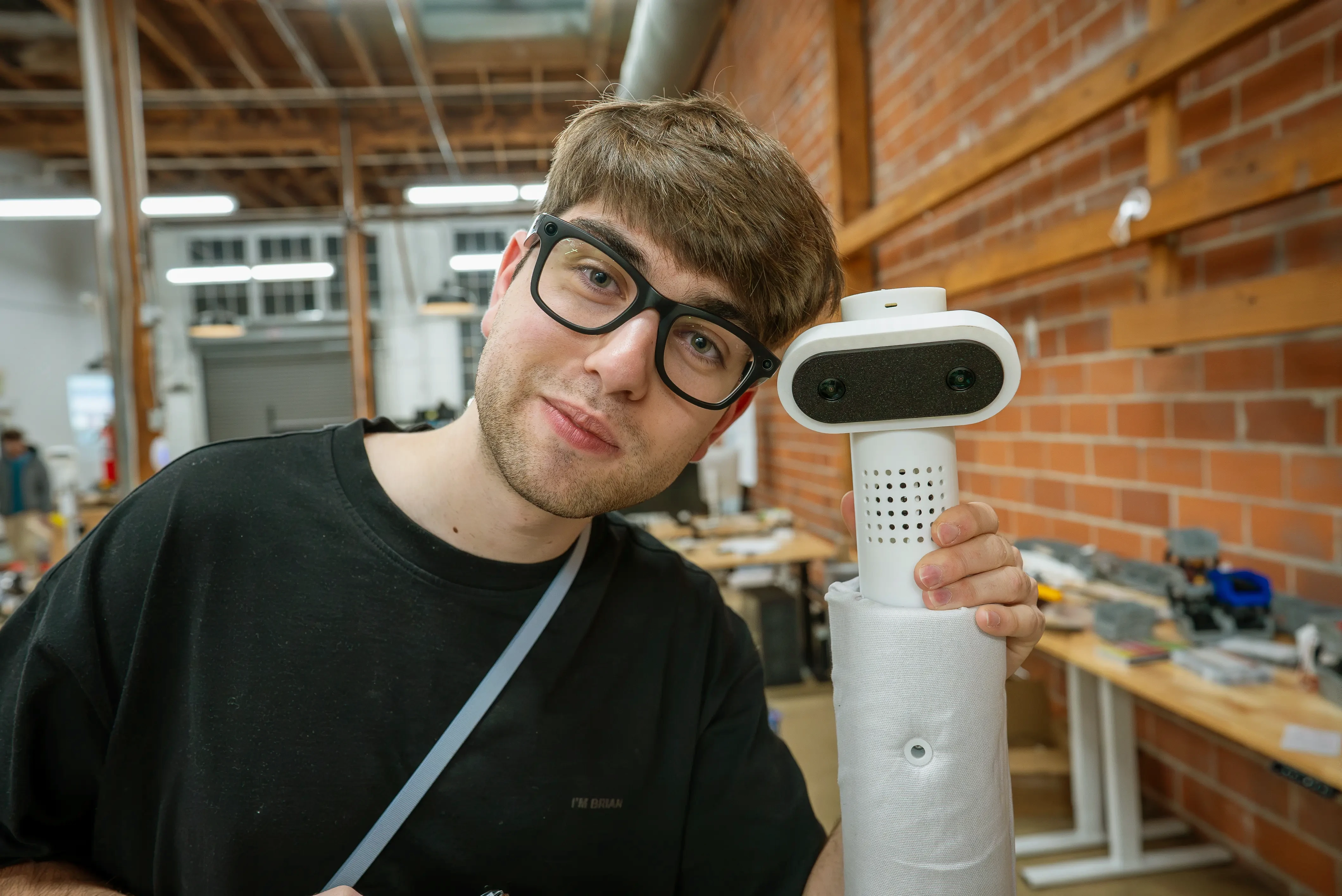
You can find Brian here. DM and tell him I sent you.
Notes
- [1]
I'm 95% sure he was joking when he told me this but I wasn't sure. Until I asked his roommate who said it was actually five months.
- [2]
I personally think this is the case, hence my early documentation here.
- [3]
Brian says his work ethic is entirely separate from his appreciation for Chinese culture.
Subscribe to Alexandria
Get new posts delivered to your inbox.